


Resources by Kai Ton Chau

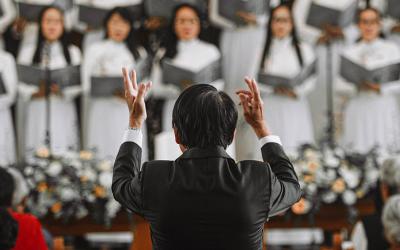
What Is a Doxology? A doxology is often sung at a worship service to express the people’s gratitude and adoration to the triune God. “Words of praise or glory,” as the word doxology literally means, can be found in many Old Testament psalms. Some examples include: “Praise be to the LORD, the God of Israel, from everlasting to everlasting. Amen and Amen” (Psalm 41:13).“Praise be to the LORD God, the God of Israel, who alone does marvelous deeds. Praise be to his glorious name forever; may the whole earth be filled with his glory. Amen and amen” (Psalm 72:18–19).“Praise be to the LORD forever! Amen and amen” (Psalm 89:52).“Praise be to the LORD, the God of Israel, from everlasting to everlasting. Let all the people say, ‘Amen!’ Praise the LORD” (Psalm 106:48). All of these examples come from the last phrases of each book (or collection) of psalms (Book I, Psalms 1–41; Book II, Psalms 42–72; Book III, Psalms 73–89; Book IV, Psalms 90–106; and Book V, Psalms 107–150). Psalm 150, as the concluding psalm of Book V and of the entire collection, is entirely devoted to praising God, ending with these succinct but carefully chosen words: “Let everything that has breath praise the LORD. Praise the LORD” (Psalm 150:6).In the New Testament, doxologies are found in the gospels and in the apostles’ letters. One well-known instance is the angels’ song in Bethlehem’s skies at the birth of Jesus: “Glory to God in the highest heaven, and on earth peace to those on whom his favor rests” (Luke 2:14). Other New Testament doxologies include: Romans 11:33–36The hymn about Jesus recorded in Philippians 2:5–11Ephesians 3:20–211 Timothy 1:17 and 2 Timothy 4:18Jude 24–25The words of praise that punctuate the book of Revelation (Revelation 1:5–6; 4:8–11; 5:9–13; 7:10–12; 15:3–4; 19:1–8). Dox·ol·o·gyFrom the Greek, δόξα/doxa, meaning “glory,” and λογία/logia, from λόγος/logos, meaning “word.” “Doxology” is literally translated as “words of glory.” In Scripture, doxologies are directed toward God. From the above examples, we see not only what doxologies are, but when to use them. In the psalms above, the words of praise appear at the end of each book and serve as a concluding prayer summarizing what has been said in the previous songs of praise, thanksgiving, petition, or lamentation. Whatever the themes or emotions are that people express through these verses, the psalms are ultimately for the glory of God (Westminster Larger Catechism, Q&A 1). Other doxologies—such as 1 Timothy 1:17—show up in the middle of passages as a moment of worship and reflection. I sometimes compare these moments of pauses, mini-reflections, or exclamations to the use of chorales in many of J. S. Bach’s larger choral works.These traditions of using doxologies to give praise to God are the antecedents of singing a doxology in worship services today. In many traditions, a doxology is sung following an assurance of pardon, after the offering, at the conclusion of the eucharistic prayer, or at the end of a service. As Reformed Worship transitions from a print journal to a digital platform, it seems particularly fitting to explore some ways to sing doxologies as an expression of our own praise for what God has done through Reformed Worship thus far. Here are several arrangements and ideas for singing the doxology with different participants. “Praise Our Father, God on High”Based on a Chinese TuneMusic by Li Bao-chen (public domain); English lyrics by Kai Ton Chau Chau has graciously made this arrangement available as a free download along with the melody with a a doxological text in the resources section at the end of this article. The tune WENDI (or WENTI) is a fairly well-known Chinese tune attributed to Taiwanese composer Li Bao-Chen. The original lyrics, entitled 聞笛 / “Listening to the Bamboo Flute,” is a poem by Zhao Gu, who lived during the ninth-century Tang dynasty. The melody appears in the hymnal Lift Up Your Hearts (#940), where it is paired with the priestly blessing from Numbers 6:24–26.I adapted the choral version of WENDI and wrote new lyrics for a four-stanza trinitarian doxology. Each of the first three stanzas is dedicated to a member of the Trinity, with the fourth stanza addressed to the trinitarian God as a whole. This is a common approach with doxologies. Interestingly, though the music was originally written for the poem by Zhao Gu, it fits the four-stanza structure of a doxology perfectly.The new text not only directs our praise to God the Father, God the Son, and God the Holy Spirit, but also intentionally uses other biblical names for God, including “Holy One” for the Father, “Lamb of God” and “the Way, the Truth, and the Life” for the Son, and “Giver, Helper, Counselor” for the Holy Spirit. It also describes attributes of God, such as faithful, loving, true light, giver, and helper.This doxology can be sung by the choir alone or with the congregation. The first stanza is sung in unison, emphasizing the strength of God the Father. When the melody is paired with a countermelody in the second stanza, it symbolizes the dual nature of Christ Jesus. The singers’ breath forming the “oh”s and “ah”s in the third stanza are a perfect portrayal of the Holy Spirit as “God’s own breath.” The grandeur of the harmony and accompaniment provides a perfect backdrop for praising the Trinity in the final stanza. The flying notes in the pentatonic scale in the final measures mimic the sound of the bamboo flute and signify everlasting praise. “Praise Our Triune, Mighty God!” (“萬變生機/ The Ever-Changing Nature”)A Doxology for Children’s ChoirMusic and Chinese lyrics by Flora Pui Fan Tam; English lyrics by Kai Ton ChauTam and Chau have graciously made the children’s arrangement “The Ever-Changing Nature” available as a free download in the resources section found following this article along with the doxology portion of that piece, entitled “Praise Our Triune, Mighty God!”.The Chinese version of the anthem “萬變生機/ The Ever-Changing Nature” is an award-winning composition for a treble voice choir by Hong Kong-based composer Flora Tam. It has been one of the top song choices in the Hong Kong Schools Music Festival and has been sung by school and community choirs around the world. The English lyrics are a loose translation of the composer’s original Chinese text.The children’s anthem opens with a portrayal of how nature glorifies God. The morning mist, the twilight, the weaving winds, the murmuring waves—all creation joins in praise to the Creator God. In a burst of joy, the final section brings everyone together as they join with creation in singing a doxology.The full version is written for a two-part children’s choir. The vocal range (D to F’) is suitable for elementary school kids. What makes the song interesting is that in the second section, the higher voice is a descant, blending words of praise with the lyrics about nature. After a key change, the parts combine to offer the final doxology. Optionally, the congregation can join in to give praise to the triune God. That standalone doxological section, entitled “Praise Our Triune, Mighty God!”, is found on p. 45. “Praise God, from Whom All Blessings Flow” DUKE STREET Hatton LUYH 219, GtG 265, 486 and LASST UNS ERFREUEN LUYH 551, GtG 10, 15, 327, 609Many congregations are so familiar with the words of Thomas Ken’s “Praise God, from Whom All Blessings Flow” that it is referred to as simply “the doxology.” But sometimes it is helpful to shake up the familiar. Consider singing the doxology lyrics to a different familiar tune. Ken’s text is in the poetic meter of 8.8.8.8, with each line of text comprising eight syllables. In hymn writing, composers, lyricists, and editors match tunes and texts with compatible meters. Most modern hymnals include a metrical index that groups songs by their meters (see pp. 1056–61 of the hymnal Lift Up Your Hearts as an example). In theory, one may choose any tune that fits the meter of the text, especially for non-tonal languages such as English.However, one must be careful to consider whether the emotion or mood of the tune fits well with particular texts. For example, the 8.6.8.6 meter of “Amazing Grace” fits the tune ST. ANNE (commonly paired with the text “O God, Our Help in Ages Past”), but the majestic feel of that tune does not work well with the introspective lyrics of “Amazing Grace.”Pairing different but carefully chosen tunes with familiar texts can be a refreshing experience for singers. Because a new melody will have different contours, vocalists may sing with a heightened awareness of the text instead of just singing by rote.For choral and congregational singing of the doxology, several familiar hymn tunes work equally well as OLD HUNDREDTH Bourgeois, LUYH 965 or NEW DOXOLOGY. LUYH 964 Consider DUKE STREET (“Jesus Shall Reign” Watts, LUYH 219, GtG 265, SSS 209). The rising melody on the first and third phrases is a tremendous fit for the words “Praise God, from whom all blessings flow” and “Praise him above, ye heav’nly host.” The downward movement of the second phrase is a word painting of “all creatures here below.” To add grandeur, consider using Hal Hopson’s arrangement. This concertato (a style of music where different groups such as instruments and singers share the same melody) for organ, choir, and congregation is a doxology to Jesus. To turn the song into a trinitarian doxology, the choir may sing it the first time with the doxology text in unison (up to measure 36), then skip to measure 77 and invite the congregation to join with the doxology text while the choir sings the descant.More adventurous congregations could try using the tune LASST UNS ERFREUEN LUYH 551, GtG 10 (the tune for “All Creatures of Our God and King”) with the doxology text. Keep the alleluias between the second and third phrases, and “O praise him, … alleluia” at the end.
Read The Article

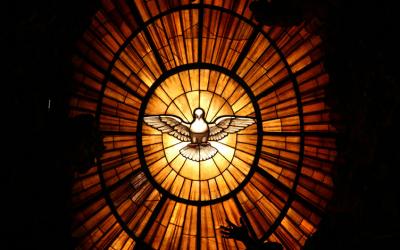
On the day of Pentecost, the Holy Spirit descended on Jesus’ disciples in the witness of a large community of Christ-followers (Acts 2:1–13). Before his suffering and resurrection, Jesus promised his disciples that “another advocate,” the Spirit of truth, would live with them forever (John 14:16–17). This promise was fulfilled on Pentecost, a day when a small band of Christ-followers was renewed and revitalized by the Holy Spirit and transformed into the church.Pentecost is a time when the body of Christ celebrates renewal in us individually and in all of creation. As we “profess [our] confidence and security in knowing the Spirit’s power is available for [our] mission,” we also “grow in awareness of the immensity of its calling to reach the world with the gospel” (The Worship Sourcebook, 2nd edition, 2013, p. 693)In the following selections of congregational songs, some are prayers that the Holy Spirit revives us; others are nineteenth-century hymns that have become less known in the contemporary church. Suggestions are provided to pair them with worship liturgies. “’Tis Burning in My Soul” with a Call to WorshipCall to WorshipThe love of God has been poured into our heartsthrough the Holy Spirit who has been given to us;we dwell in him and he in us.Give thanks to the Lord and call upon his name;make known his deeds among the peoples.Sing to him, sing praises to him,and speak of all his marvelous works.Holy, holy, holy is the Lord God Almighty,who was and is and is to come!—From The Book of Alternative Services of the Anglican Church of Canada, Anglican Book Centre, 1985. © 1985, General Synod of the Anglican Church of Canada. Used with permission.Song: “’Tis Burning in My Soul” WhiteLittle is known about Delia T. White, the author of this hymn. Her texts appear in several late nineteenth-century hymnals published in Philadelphia (edited by William J. Kirkpatrick) and New York (edited by Robert Lowry and Ira Sankey). Her hymns reflect the gospel style of her time, with themes about being close to God and obedient to the Master, and about the renewal of our spirits. This hymn, with a tune written by Kirkpatrick, was first published in Songs of Love and Praise, No. 3, in 1896. Kirkpatrick (1838–1921) was a prolific Methodist composer and hymnal editor. One of his most well-loved tunes is CRADLE SONG (“Away in a Manger” LUYH 86).“’Tis Burning in My Soul” is a hymn with a personal perspective. Its enthusiastic text describes the experience of how the Holy Spirit changes and energizes one’s life. The hymn can be sung effectively with organ and piano or in the gospel style with a band. (Music Score) “Holy Spirit, Revive Me” with ConfessionPrayer of ConfessionCome, Holy Spirit!Rain upon our dry and dusty lives.Wash away our sinand heal our wounded spirits.Kindle within us the fire of your loveto burn away our apathy.With your warmth bend our rigidity,and guide our wandering feet;through Christ our Lord we pray. Amen.—Reprinted by permission from Book of Common Worship, © 2018 Westminster John Knox Press. All rights reserved.Song: “Holy Spirit, Revive Me” YeungYeung Pak-lun David (1931–2023) was a prolific composer of sacred music. Born in Mainland China, he learned the violin, conducting, and composition with prominent musicians and educators. He served a number of churches and community groups in Hong Kong. In 2014, the Hong Kong Chinese Christian Churches Union awarded Yeung a Ten Outstanding Christian Seniors Award—Lifetime Achievement for his lifelong persistence in composing hymns and his great impact on the spiritual growth of many Christians.“Holy Spirit, Revive Me” is a hymn written in 1956 still popular in Asia and other parts of the world. The lyrics are a confession and an earnest prayer that the Holy Spirit would revive us when we lose our faith, love, and hope amid the blissful sweetness or the burdens of life. The hymn has multiple versions that are suitable for the congregation as well as the choir. (Music Score)Assurance of PardonIn Christ you were marked with the Holy Spirit,a seal of our redemption in Christ.By the power of the Holy Spiritwe become dead in sin and alive anew in Christ.May you be filled with the Holy Spiritso that you may have hope of new life,may grow in your knowledge of the God of our Lord Jesus Christ,and may experience the incomparable power of Godthat raised our Lord Jesus Christ from the dead.—Reprinted by permission from The Worship Sourcebook, 2nd edition © 2013, Faith Alive Christian Resources, Q.2.4.5. “Lord, with Glowing Heart I’d Praise you” with OfferingOffertory: “Lord, with Glowing Heart I’d Praise You” Key, TH 80The hymnwriter, Francis Scott Key, is most well known for the lyrics he penned that later became known as “The Star-Spangled Banner.” Key (1779–1843), educated at St. John’s College in Annapolis, Maryland, was a lawyer by profession but also wrote a number of hymns, with “Lord, with Glowing Heart I’d Praise Thee” being one of the texts more recognized in the contemporary church. The poem, written in 1813, first appeared in Church Poetry, published in 1823: and has been updated for use with this article (see below).In the very common metric of 8.7.8.7 D, this hymn has historically been associated with several tunes, including FABEN (by John H. Willcox), AUTUMN (by François-Hippolyte Barthélémon), and VESPER HYMN (by Dimitri S. Bortnianski). I suggest using the tune RIPLEY by Lowell Mason, which you may know as “Praise the Lord! Sing Hallelujah.” LUYH 518This hymn is fitting as an offertory. The last verse may also be used in the sending liturgy (see text on this page). A choral version is available at tinyurl.com/RW151LordWithGlowingHeart. For a contemporary rendition of this hymn by Barrett Black, see barrettblack.bandcamp.com/track/lord-with-glowing-heart-id-praise-thee.Lord, With Glowing Heart I’d Praise You1. Lord, with glowing heart I’d praise youfor the joy your love bestows. For your pardoning grace, I’d thank youand the peace that from it flows.But help, O God, my weak endeavor;this dull soul no joy can raise;you must light the flame, or nevercan my love be warmed to praise.2. Praise, my soul, the God that sought me,wretched wanderer far astray;found me lost, and kindly brought me from the paths of death away.Praise, with love’s devoutest feeling,God who saw my guilt-born fear,and, the light of hope revealing,pierced my soul when Christ appeared. 3. Praise the Savior God that drew meto that cross, new life to give,offered grace and pardon to me,bade me look to Christ and live.Praise the grace who did pursue me,roused me from my fatal ease;praise the grace whose promise warmed me,praise the grace that whispered peace.4. Lord, my heart and soul’s deep feelingsvainly would my lips express:low before your footstool kneeling,deign this suppliant’s prayer to bless.Let your grace, my soul’s chief treasure,love’s pure flame within me raise;and, since words can never measure,let my life show forth your praise.—Francis Scott Key, 1819, P.D., adaptedPrayer for the OfferingGod of abundant love, we thank you for the gift of your Spirit, poured out on all who live in Christ. May these gifts be our response of abundant love; use them to bless [name the specific cause], through Christ, our Lord, in the power of the Holy Spirit. Amen.—Reprinted by permission from The Worship Sourcebook, 2nd edition © 2013, Faith Alive Christian Resources, Q.5.2.1.Additional Pentecost Song SuggestionsThe following songs would also pair well with the liturgical elements included in this article. Following the Call to Worship“Revive Thy Work, O Lord” Midlane, TH 370 (pair with the tune REVIVE by W. Howard Doane)“O Lord, You’re Beautiful” Green, TomlinFollowing the Assurance of Pardon“Search Me, O God” Orr, SSS 506

Read The Article
Advent Choral Music for Smaller Church Choirs

If you are a choir director you are probably working on finalizing your choral repertoire for Advent. In this blog Dr. Kai Ton Chau provides suggestions for five Advent choral pieces chosen with the smaller church choir in mind. The pieces were chosen with themes of waiting, preparation, and light, making them very adaptable for various Advent preaching series and lectionaries. Chau also included helpful teaching notes for each piece.

Read The Article

The Chinese church my family attended when we lived in Toronto, Ontario, has always held several special annual worship services. One of them is the New Year’s Eve Service of Thanksgiving and Testimony, in which people look back at the year past and publicly recount God’s grace and deeds, give thanks for answered prayers, and acknowledge God’s guidance and leadership as they start a new year.In a worship service, giving testimonies can be formal and structured. For example, career missionaries often share their calling and ministry stories when they visit their supporting churches. Likewise, students and families who participate in local or intercultural short-term mission work tell stories about their encounters and how their perspectives and lives changed because of the experience. But sharing testimony during a worship service might also be informal. Some congregations invite members to give spontaneous testimonies about experiences such as answered prayers, God’s miraculous intervention in life, or walking in faith during challenging situations.Indeed, everyone has a story. Reformed Christians believe that God is sovereign: the entire world belongs to God. Thus our story is part of God’s story. Theologian Luis Pedraja observes that sharing testimony “is not something a person does; it is something a person has—it is an integral part of that person’s life” (“Testimonios and Popular Religion in Mainline North American Hispanic Protestantism,” 2010, p. 11. Online article published by the Lived Theology Project). Therefore, as we reenact the gospel story in our worship, sharing testimony is giving personal witness to God’s deeds.The Grand StoryThis is my Father’s world; the birds their carols raise;the morning light, the lily white, declare their Maker’s praise.This is my Father’s world; he shines in all that’s fair.In the rustling grass I hear him pass; he speaks to me everywhere.—Maltbie D. Babcock, “This Is My Father’s World,” P.D.The practice of giving public testimony has been an integral part of Christian worship throughout history. In Old Testament times, the central themes of Israelite worship are remembering the covenantal relationship with God (Genesis 17:8; Exodus 2:45; Leviticus 26:45; Ezekiel 14:11; Jeremiah 32:38; Zechariah 6:16), retelling the deliverance in the Exodus story (Psalm 78:14; 81:10), and giving thanks for God’s lavish provision (Psalm 105:5). Christian worship in the New Testament church also centers around Christ’s salvific deeds—his incarnation, his suffering and death, and the redemption of the world through his resurrection. In other words, the gospel—the salvation story—shapes our worship as the gathered people retell and reenact the biblical narrative.In worship, we sing and speak of God’s beautiful creation but also lament the brokenness in the world and in ourselves. We also give thanks and express our hope in Christ’s redemption as we receive a charge to live as salt and light in God’s beloved world. New Year’s Eve, therefore, is a perfect occasion for the body of Christ to gather to remember the goodness of creation and look forward to the marvelous things yet to happen.The Personal StoryAmazing grace—how sweet the sound— that saved a wretch like me!I once was lost, but now am found, was blind, but now I see.Through many dangers, toils, and snares I have already come;‘tis grace hath brought me safe thus far, and grace will lead me home.—John Newton, “Amazing Grace,” P.D.The lyrics of the beloved hymn “Amazing Grace” are a powerful testimony of salvation—the “before” and “after” of a personal story. It is a story of how God intervened in our lives when we were in a state of hopelessness, a story of a changed outlook. More importantly, the story continues until shalom returns.We all have stories to tell. Sometimes the stories are dramatic, such as a “wretch” being saved. Sometimes the stories are simple, the day-to-day unfolding of God’s grace and provision. Pedraja recognizes that our testimonies “are not always dramatic accounts of God’s power, but merely a tacit understanding on the part of the people that God is present in the everyday struggle of life” (Pedraja, 33). When we retell these stories in a worship service, we practice giving thanks for and nurturing hope in redemption and eternal life. If your congregation does not have a time for testimony in its regular worship liturgy, New Year’s Eve provides a perfect backdrop for the congregation to give testimony of how God walks alongside us in our journeys and how the experience strengthens us as we move forward.A New Year’s Eve Service of Thanksgiving and TestimonyThe following is an outline for a New Year’s Eve service of thanksgiving and testimony for which the congregation may gather in the afternoon or evening of December 31. Feel free to expand it based on your chosen theme and the stories of your congregation. The service is based on “Thanks to God,” a hymn written by Swedish hymnwriter August Ludvig Storm (see music attached at the end of the page). The song lists twenty-four things for which the author was thankful. In this thanksgiving and testimony service, you may group some of these items together as themes for people’s testimonies. After each segment of testimony, the congregation can repeat the song.Call to WorshipFor a testimony-sharing service:God calls us to worship, and we come,some with laughter and songs of joy.God calls us to worship, and we come,some from a sense of obligation or habit.God calls us to worship, and we come,some with hearts heavy with grief.God calls us to worship, and we come,some with distraction or exhaustion.God calls us to worship, and we come,some with eagerness and enthusiasm.God calls us to worship, and we come,some with stress, loneliness, or depression.As God’s dearly loved children,we bring all our joy and pain, hurt and hopeinto this place of Spirit-given grace, love, and hope.—Reprinted by permission from The Worship Sourcebook, Second Edition © 2013, Faith Alive Christian Resources (TWS 1.2.28).For a thanksgiving service:We will give thanks to you, O Lord, with our whole heart;we will tell of all your wonderful deeds.We will be glad and exult in you;we will sing praise to your name, O Most High.—from Psalm 9:1–2, NRSV. Reprinted by permission from The Worship Sourcebook, Second Edition © 2013, Faith Alive Christian Resources (TWS 1.2.2).Songs of Thanksgiving and TestimonySuggestions: “This Is My Father’s World” Babcock“I Love to Tell the Story” Hankey“Thank You, Lord” Sykes“My Testimony” Elevation WorshipLitany It is good to praise the Lord      and make music to your name, O Most High,to proclaim your love in the morning      and your faithfulness at night,to the music of the ten-stringed lyre      and the melody of the harp.For you make me glad by your deeds, O Lord;      I sing for joy at the works of your hands.How great are your works, O Lord,      how profound your thoughts!You, O Lord, are exalted forever.—from Psalm 92:1–5, 8, NIV. Reprinted by permission from The Worship Sourcebook, Second Edition © 2013, Faith Alive Christian Resources (TWS 1.4.5).Scripture Reading: Psalm 105Testimonies: The Story Among Us[Consider using the hymn “Thanks to God” or another hymn to organize the themes of the testimonies, singing the stanzas in between. For example, invite people to share in the following categories:]Stories of God’s gifts of salvation and peace“Thanks to God,”(st. 1) StormStories of God’s gifts of answered prayers and love“Thanks to God,”(st. 2) StormStories of God’s gifts of hope and unexpected moments of joy“Thanks to God,”(st. 3) StormClosing Songs Suggestions: “Great Is Thy Faithfulness” Chisholm“I Stand Amazed” Gabriel“Thank You, Lord” Moen and Baloche“You Never Let Go” RedmanBenedictionKnow therefore that the Lord your God is God;he is the faithful God,keeping his covenant of loveto a thousand generationsof those who love him and keep his commands.—Deuteronomy 7:9, NIV. Reprinted by permission from The Worship Sourcebook, Second Edition © 2013, Faith Alive Christian Resources (TWS 7.6.1.1).

Read The Article

For many churches, Easter is a high point in the Christian calendar. After Easter Sunday, worship activities tend to slow down, and Ascension Day and Pentecost don’t get as much attention. Yet the Christian calendar is not complete without celebrating Jesus’ ascension to heaven and the descent of the Holy Spirit on the followers of Jesus. The church has a long history of observing the Feast of Ascension. St. Augustine says it is of apostolic origin. Some scholars trace it back to A.D. 68. To the early Christians, Jesus’ departure from earth was the final sign of his divinity. Today, the ascension is often associated with the affirmation of our faith and hope in Jesus. Pentecost is celebrated on the seventh Sunday, or the fiftieth day, after Easter Sunday. It’s based on the narrative of Acts 2, when the Holy Spirit descended upon the apostles and other Christ-followers when they were in Jerusalem celebrating the Feast of Weeks. Traditionally, Pentecost marks the beginning of the Christian church. In addition to commemorating the event in the infant church, Christian congregations today often emphasize themes of mission, witnessing for Christ, and bringing justice to the community. For this Sing 10, I asked several musicians and worship leaders with different cultural and geographic backgrounds for their choice of congregational songs for Ascension and Pentecost Sundays. Despite the diversity of contexts, there is a unified message as the church marks the completion of Jesus’ earthly ministry, recognizes its call to mission, and looks forward with hope to be united with Christ once again. Contributors Bruce Benedict (BB) is the worship and arts chaplain at Hope College in Holland, Michigan. He is also the creative director for Cardiphonia Music and curates the lively Liturgy Fellowship community on Facebook. Kai Ton Chau (KTC) is associate editor for Reformed Worship and resource development specialist at the Calvin Institute of Christian Worship. He also serves on the chapel planning team at Calvin Theological Seminary and teaches as adjunct professor at Calvin University. I-to Loh (ITL) is a Taiwanese church musician and ethnomusicologist. He is adjunct professor at Tainan Theological College and Seminary, Taiwan Theological College and Seminary, and the Southeast Asia Graduate School of Theology. Ruth Ann Schuringa (RAS) has been worship director at Immanuel Christian Reformed Church in Brampton, Ontario, since 2003. From 2015–2019 she was also the worship ministry team leader at CrossPoint CRC in Brampton. Recently Ruth Ann has been endorsed as a Worship Coach for the Worship Ministries of the CRC. Her greatest joy is seeing worship leaders and worship teams lead skillfully and pastorally, engaging congregations to know and experience God. Lisa Weaver (LW) is an ordained clergyperson of the American Baptist Churches USA. She currently serves as an assistant professor of worship at Columbia Theological Seminary in Decatur, Georgia. Ascension Congregational Songs of Faith and Hope Call to Worship “Lift Up Your Hearts, Believer!” Dustan, OLOF 348 This song, by Canadian writer Sylvia Dunstan (1955–1993), is a call for the church to commemorate the completion of Christ’s earthly ministry. This hymn is a good choice for Ascension Sunday because it links the salvific moments in Christ’s life, it reiterates Christ’s promise of the sending of the Holy Spirit, and it forces the church to pause and recognize the connection among resurrection, ascension, and Pentecost. Many churches go from Easter to Pentecost without realizing that Pentecost is the fulfillment of what Christ said in John 14: that he would be leaving to prepare a place for us in heaven and would send an advocate or comforter to stay with us. (LW) Songs of Praise “Hosanna to the Prince of Light” Watts, arr. Kimbrough (See music on p. 12. Spotify: tinyurl.com/y354n7nn) Written by Wendell Kimbrough in 2012, the lyrics of this ascension song are based on Isaac Watts’s 1709 hymn. In the song, the church is urged to give praise to Jesus, the Prince of light. It is a triumphant hymn that captures the biblical language of Christ’s ascension. (BB) “Song of Moses” Keyes, Smith, et al., CCLI #5880942 (Spotify: tinyurl.com/y5fegqvd) Based on Exodus 15:3 and Psalm 28:7, this Aaron Keyes song is a take on the theme of ascension from the contemporary worship genre engaging one of the church’s traditional Old Testament canticles. (BB) Songs of Faith “You, Lord, Are Both Lamb and Shepherd” Dunstan, LUYH 225, GtG 274, SSS 210 (YouTube: tinyurl.com/yxevz45g) The poignant text by Sylvia Dunstan builds on paradox, “a device little used in hymnody because the singing tempos of most congregational songs leave little time to ponder the nuances of each paradox relationship,” wrote Dr. Bert Polman on hymnary.org. Paired with the hauntingly beautiful French carol PICARDY, this Christological text uses imagery from both the Old and New testaments. (KTC) “Across the Lands (You’re the Word of God the Father)” Getty and Townend, LUYH 775, SSS 654 (YouTube: tinyurl.com/y6kevpjt) This upbeat song was written for a 2003 mission prayer book. The lyrics tell the entire story of the gospel from creation to Christ’s birth, ministry, suffering, resurrection, and ascension. (KTC) “The Lord Is My Light” Bouknight, LUYH 431, PfAS 27B (YouTube: tinyurl.com/y63f8oez) The thought of Jesus’ “departure” can make us uneasy or even frightened. What would happen if Jesus left us? However, the message of the ascension is one of power and hope—that Jesus, fully divine and fully human, now sits on the throne and intercedes for us (Romans 8:34). This gospel song captures well our faith and hope in the ascended Christ. (KTC) Song for Sending “Build Your Kingdom Here” Rend Collective, CCLI #6186078 (YouTube: tinyurl.com/y339eo6t) Written by the Irish band Rend Collective, the song begins with a powerful prayer: “Come, set your rule, and reign in our hearts again,” and each verse ends with “We are your church; we need your power in us; we are the hope of the earth.” It is a kingdom mission song fitting for Ascension Day. (RAS) Pentecost Congregational Songs for Mission and Justice Call to Worship “O Come Quickly, Holy Spirit / O Datanglah ya Roh Kudus” Tamaela, STB 7 (See music on p. 12-13. YouTube: tinyurl.com/y2gxpoe7) This Indonesian song begins with a solo voice singing in a free rhythm, pleading for the coming of the Holy Spirit. Then the congregation joins the call with a response, “Ya Roh Kudus,” or “O Holy Spirit.” (The congregation is encouraged to sing in the Indonesian language.) The song may be accompanied by a steady drumbeat. (ITL) Prayer of Supplication “Rest on Us” Harvest Bashta, CCLI 7126736 (Spotify: tinyurl.com/yxjvzgjh) A contemporary charismatic worship song that evokes the language of the Spirit hovering over creation, perhaps hinting at the chaos in our lives and the continual need we have for the Holy Spirit to bring order and life. (BB) Prayer for Illumination “They Were Waiting” Zeyl (YouTube: tinyurl.com/yxou4fb4) Jeremy Benjamin Zeyl wrote this song a few years ago for his home church, Talbot Street Christian Reformed Church in London, Ontario. The power of this song for worship is in the biblical story of Pentecost, the coming of the Holy Spirit, along with a singable, meaningful chorus. The first two verses and the chorus tell us the story from Acts 1 before the third verse pivots and makes it personal, bringing Pentecost to the here and now: “And now you come, Spirit; you come here among us, rushing in, filling up our hearts.” By way of changing a few words, the final chorus becomes a prayer for the local congregation: “Holy Spirit, you fill up our hearts and give us words of truth.” (RAS) Communion Song “Come, Thou Everlasting Spirit” Wesley, arr. Benedict (See music on p. 14. Spotify: tinyurl.com/y4ag3pxu) This is one of Charles Wesley’s hymns for the Lord’s Supper that specifically meditates on the Holy Spirit’s role in the holy meal. The hymn addresses the Spirit as “True Recorder,” “Witness,” and “Remembrancer Divine.” (BB) Call to Mission “Set Us Free for Freedom” Murray (See music on p. 15) This hymn by New Zealand writer Shirley Murray is set to a new melody composed by Taiwanese composer I-to Loh. The song is a petition for God to free us from worldly bondage and live into God’s purpose. (ITL) “God of Tempest, God of Whirlwind” Stuempfle, OLOF 353 Herman Stuempfle Jr. was president of the Lutheran Theological Seminary in Gettysburg, Pennsylvania. Set to the tune CWM RHONDDA, the hymn is suitable for Pentecost Sunday because it contains strong geological imagery, it exhorts the church to missional service, it asks the Spirit’s aid to combat injustice and avoid lethargy, it calls for unity in the family of God, and it points to earth’s healing (not just the people, but all God’s creation). (LW) “King of Kings” Hillsong, CCLI #7127647 (YouTube: tinyurl.com/y3hp5sg7) This song is a surprising little gem. From its trinitarian chorus to the biblical storyline found in the verses, it could be used in many liturgical contexts and church seasons. The first verse begins with Advent. Verse two brings us to Jesus’ arrival on earth to “reconcile the lost,” and then verse three celebrates the resurrection. The fourth verse captures the coming of the Holy Spirit and the birth of the church: “And the church of Christ was born, then the Spirit lit the flame; now this gospel truth of old shall not kneel, shall not faint.” Here’s a challenge for the church: to rekindle this spirit and to know the power of the gospel. (RAS) Additional Sources OLOF: One Lord, One Faith, One Baptism: An African American Ecumenical Hymnal (Chicago: GIA Publications, 2018). STB: Sound the Bamboo (Chicago: GIA Publications, 2000).

Read The Article