
Please wait while we generate your results...
Epiphany, like Christmas, always has the same calendar date. Falling on January 6, Epiphany concludes the season of Christmas or the twelve days of Christmas and doesn’t necessarily fall on a Sunday. Some traditions or denominations mark the season of Epiphany which lasts until the beginning of Lent. Baptism of Our Lord Sunday also occurs in the season of Epiphany.
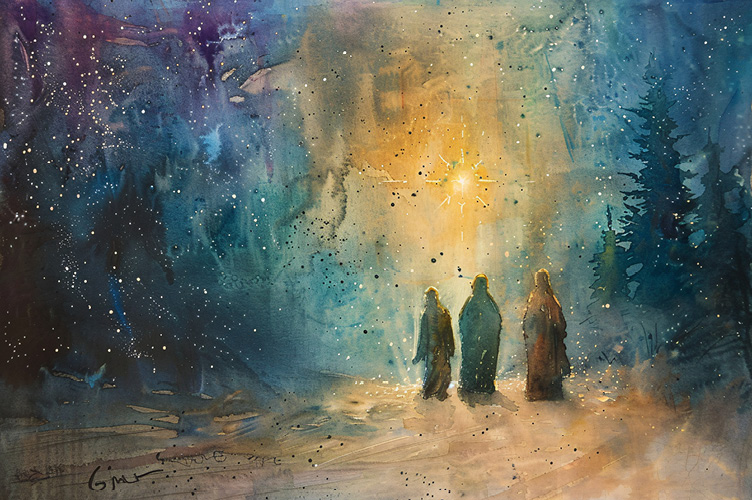
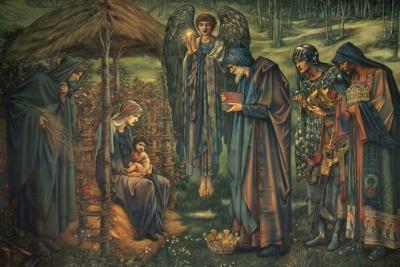
Epiphany provides an opportunity for the church to focus on the journey of the Magi to see Jesus, a journey that in all reality took two years (not twelve days). The story of the Magi reminds us that Jesus came as a light for all nations, a king who stands in contrast to the rulers of the world, and an answer to the multi-generational waiting for redemption. Afterall, the incarnation of Jesus Christ involves far more than Christmas—it encompasses the whole vision of bringing God’s glory to the nations of the world.
This confession and assurance originally appeared in "Be Not Afraid—Epiphany 1: Fear of Strangers."“See, Darkness Covers the Earth, and Thick Darkness Is Over the Peoples”Call to ConfessionGod calls us to live in the light and to walk as people of the light. But on this Epiphany Sunday, we come before the Lord in prayer to confess that we still walk in darkness. We make personal decisions that drive us into the darkness. Our world is one filled with darkness, brokenness, and despair. We are deeply in need of Jesus Christ, the light of the world, to enter in and shine on us. Together we confess in song our need for light.Sung Prayer of Confession“Christ, Be Our Light” (st. 1, 3, 5) FarrellAssurance of PardonThe light of God shines in the darkness. God is calling the whole world together in unity to walk in the light as beloved and chosen people. Open your hearts to God’s light and to one another. Thanks be to God.
This is part of the worship series, "Be Not Afraid”Series Introduction and Prelude Advent 1 | Advent 2 | Advent 3 | Advent 4 | Longest Night | Christmas Eve | Epiphany 1 | Epiphany 2 Epiphany 2Fear of Strangers 2God Calls Us to Worship and PraiseCall to WorshipI will extol the Lord at all times; his praise will always be on my lips.I will glory in the Lord; let the afflicted hear and rejoice.Glorify the Lord with me; let us exalt his name together.—Psalm 34:1–3Songs“Praise the LORD! Sing Hallelujah” (st. 1, 3–4) Psalter“Lord Most High” Harris and Sadler Greeting from GodWe Greet Each OtherThe Lord Is Close to the Broken-HeartedCall to ConfessionI sought the Lord, and he answered me; he delivered me from all my fears.Those who look to him are radiant; their faces are never covered with shame.This poor man called, and the Lord heard him; he saved him out of all his troubles.—Psalm 34:4–6Song“Pelas dores deste mundo / For the Troubles” NetoPrayer of ConfessionO Christ, you are the light of the world. Shine into the dark places and expose the sins of greed, oppression, hate and violence. Fill us with love, joy, peace, patience, and a willingness to forgive.O Christ, you are the light of the world. We pray for the homeless, the refugees, the expelled and forgotten people everywhere. Strengthen us in our belief that you are a God of justice. Empower us with the determination to work for basic human rights.O Christ, you are the light of the world. We pray for people everywhere that you would show us how we are to live together as neighbors, understanding and respecting one another. We remember before you the many places in the world where there is conflict between nations. We pray that love may determine a just solution.O Christ, you are the light of the world. As the Risen Christ you broke the chains of death; free us from every kind of oppression. Breathe your Holy Spirit upon us. Make us a people of hope who live in lands where there is peace and justice for everyone.—Pocket Prayers for Peace and Justice, compiled by Christian Aid. Prayers for Peacemakers, page 46, by Women of Jerusalem, Church House Publishing, 2004, © The Archbishops' Council of the Church of England. Used by permission. copyright@churchofengland.org. Assurance of PardonThe righteous cry out, and the Lord hears them; he delivers them from all their troubles.The Lord is close to the brokenhearted and saves those who are crushed in spirit.The righteous person may have many troubles, but the Lord delivers him from them all.—Psalm 34:17–19Song“Blest Are They” (st. 1, 2, 5) Haas Statement of FaithWhat do you believe about God the Father?I believe in Almighty God,who guided the people in exile and in exodus,the God of Joseph in Egypt and Daniel in Babylon,the God of foreigners and immigrants.What do you believe about God the Son?I believe in Jesus Christ,a displaced Galilean,who was born away from his people and his home,who fled his country with his parents when his life was in danger,and returning to his own country suffered the oppressionof the tyrant Pontius Pilate, the servant of a foreign power,who then was persecuted, beaten, and finally tortured,accused and condemned to death unjustly.But on the third day, this scorned Jesus rose from the dead,not as a foreigner but to offer us citizenship in heaven.What do you believe about God the Spirit?I believe in the Holy Spirit,the eternal immigrant from God’s kingdom among us,who speaks all languages, lives in all countries,and reunites all races.I believe that the church is the secure homefor the foreigner and for all believers who constitute it,who speak the same language and have the same purpose.I believe that the communion of the saints beginswhen we accept the diversity of the saints.I believe in the forgiveness of sin, which makes us all equal,and in reconciliation, which identifies us morethan does race, language, or nationality.What do you believe about the life to come?I believe that in the resurrectionGod will unite us as one peoplein which all are distinctand all are alike at the same time.Beyond this world, I believe in life eternalin which no one will be an immigrantbut all will be citizens of God’s kingdom,which will never end. Amen.—Book of Common Worship, 2018 edition. © 2018, Westminster John Knox Press. Used by permission. All rights reserved. Special Music“Refugee King (Away from the Manger)” Scheer, Vice, Benedict, and RuthGod Speaks to Us Words of GraceScripture ReadingMatthew 2:1–8, 12–23Message“Fear of the Stranger” (Part 2)We Dedicate Ourselves to God’s Work and Go Out to ServeSong“Imagine” Getty Declaration of FaithHow does the knowledge of God’s creation and providence help us?We can be patient when things go against us,thankful when things go well,and for the future we can havegood confidence in our faithful God and Fatherthat nothing in creation will separate us from his love.For all creatures are so completely in God’s handthat without his willthey can neither move nor be moved.—Heidelberg Catechism, Q&A 28, Translation © 2011, Faith Alive Christian Resources. Used by permission.Even now,as history unfoldsin ways we know only in part, we are assuredthat God is with us in our world,holding all things in tender embraceand bending them to his purpose.The confidence that the Lord is faithfulgives meaning to our daysand hope to our years.The future is secure,for our world belongs to God.—Our World Belongs to God, para. 12, © 2008, Christian Reformed Church in North America, Grand Rapids MI. www.crcna.org. Used by permission.Parting BlessingSong“The Lord Is My Salvation” GettyRevised Common LectionaryYears A, B, C: Epiphany—Epiphany of the LordYear A: Christmas—First Sunday after Christmas Day
This is part of the worship series, "Be Not Afraid”Series Introduction and Prelude Advent 1 | Advent 2 | Advent 3 | Advent 4 | Longest Night | Christmas Eve | Epiphany 1 | Epiphany 2 Epiphany 1Fear of Strangers 1“Arise, Shine, for Your Light Has Come”Responsive Call to WorshipMay the light of God’s love push back the darkness.We come to the light from the four corners of the earth, from the north, from the south, from the east, and from the west.We come from many nations and many cultures.But we are all one in Jesus Christ.We come seeking the light that guides us to life.But we are all one in Jesus Christ.Let us lift up our many voices and praise the God of all people.—From Reformed Worship 63, © 2002, Worship Ministries of the Christian Reformed ChurchSong“Jesus, the Light of the World”(st. 1–2, 4) WesleyGreeting from GodWe Greet Each Other“See, Darkness Covers the Earth, and Thick Darkness Is Over the Peoples”Call to ConfessionGod calls us to live in the light and to walk as people of the light. But on this Epiphany Sunday, we come before the Lord in prayer to confess that we still walk in darkness. We make personal decisions that drive us into the darkness. Our world is one filled with darkness, brokenness, and despair. We are deeply in need of Jesus Christ, the light of the world, to enter in and shine on us. Together we confess in song our need for light.Sung Prayer of Confession“Christ, Be Our Light” (st. 1, 3, 5) FarrellAssurance of PardonThe light of God shines in the darkness. God is calling the whole world together in unity to walk in the light as beloved and chosen people. Open your hearts to God’s light and to one another. Thanks be to God.Song“We Are Called”(st. 1–2) Haas“Nations Will Come to Your Light, and Kings to the Brightness of Your Dawn”Scripture ReadingMatthew 2:1–12Message“Fear of Strangers” (Part 1)Declaration of PromisesRemember that at [one] time you were separate from Christ, excluded from citizenship in Israel and foreigners to the covenants of the promise, without hope and without God in the world.But now in Christ Jesus [we] who once were far away have been brought near by the blood of Christ. For he himself is our peace, who has made the two groups one and has destroyed the barrier, the dividing wall of hostility.—Ephesians 2:12–14Revised Common LectionaryYears A, B, C: Epiphany—Epiphany of the Lord
More Epiphany Season Resources

Connect
Reformed Worship Resources in Your Inbox
Sign up for the newsletter to receive the latest Reformed Worship resources and other news.
