
This is part of the worship series,
"A Classic TULIP Bouquet”
Series Introduction
Week 1 | Week 2 | Week 3
Week 4 | Week 5
Introduction
"List the five points of Calvinism,” I asked the congregation one Sunday at the start of a service. “We often use the mnemonic TULIP to help us remember what they are, so let’s work our way down the list, starting with T.” “Total Depravity,” came back loud and clear, but after that the sound level decreased noticeably with each successive point, and I could see that most of the noise was coming from those with a bit—or more—of gray around the temples. The response indicated clearly that our wonderful heritage of faith needs to be passed on to the generations coming up.
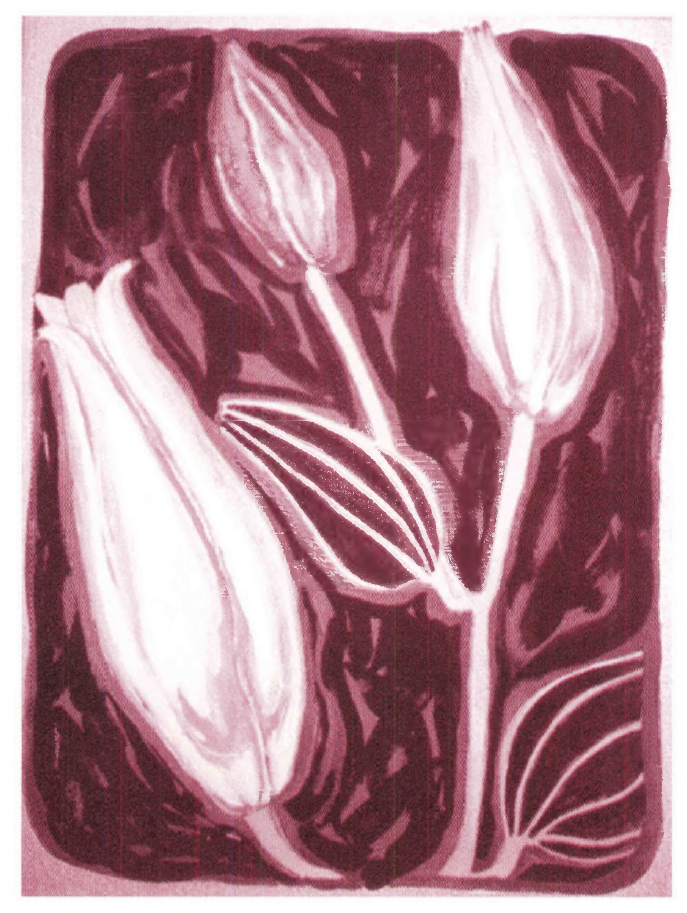
So starting that very morning, I presented the congregation with the classic TULIP bouquet—Total depravity, Unconditional election, Limited atonement, Irresistible grace, and Perseverance of the saints—one per Sunday.
Some may think it a little risky to preach straight doctrine in this age of narrative preaching. Some may think, “I could never do that here.” But I found that people are longing to know their doctrinal distinctiveness in an age of “Generic Community Bible Church,” and these five points of Calvinism are not only solid doctrine, but also solidly scriptural and surprisingly pastoral.
These teachings come from a treatise called the Canons of Dort, written by Calvinists in the Netherlands to counter the beliefs of Jacob Arminius and his followers. Arminius denied certain beliefs held by Calvinists, most notably that people were welcomed into heaven by God’s election. Instead, the Arminians believed in the ability of humans to make the choice for heaven out of their own free will. The Canons of Dort were adopted at the Synod of Dort in 1618-19. You can find them online here.
The Canons of Dort are divided into five sections. Contrary to popular belief, however, they do not follow the TULIP acronym. An acronym of the order of the Canons would actually be ULTIP. But over the years, people realized that these five points were much easier to remember (and teach in catechism class) when rearranged—thus, TULIP.
Recently, Rev. Jim Oosterhouse has repotted TULIP as FAITH (Fallen humankind, Adopted by God, Intentional atonement, Transforming grace, Held by God). I have found his book, F.A.I.T.H. Unfolded: A Fresh Look at the Reformed Faith very useful in discipling a new believer. Those who preach to new Christians or to those less familiar with TULIP may find Oosterhouse’s contributions particularly helpful.
A word of warning—this is one of the most challenging series I have ever preached, as it forced me to study and understand Reformed theology at a deeper level than I had before. It also brought me face to face with its more baffling doctrines, such as election, reprobation, predestination, and the extent of God’s sovereignty. To help me address these concerns, I relied on a few solid resources: the Canons themselves; Louis Berkhof’s Systematic Theology, which is replete with Scripture references and clearly lays out both the challenges to these points and how to address them; Lesslie Newbigen’s The Gospel in a Pluralist Society, which has a fine chapter on election; Still Sovereign: Contemporary Perspectives on Election, Foreknowledge, and Grace, a collection of essays edited by Thomas R. Schreiner and Bruce A. Ware (Grand Rapids: Baker, 1995); and John Calvin’s Institutes of the Christian Religion.
Series Outline
| Title | Scripture | |
| Week 1 | Total Depravity |
|
| Week 2 | Unconditional Election |
|
| Week 3 | Limited Atonement |
|
| Week 4 | Irresistible Grace |
|
| Week 5 | Perseverance of the Saints |
|