
This is part of the series,
“Prayers from John Bradford”.
Who was John Bradford?
"How Fair You Are!"—Adoration
“When the Roots of Our Lusts”—Confession
“What Shall I Say?”—Confession
“Open Our Eyes to See Our Great Need”—Illumination
“You Are Our Most True Pilot”—Illumination
“Who Has Revealed Yourself to Humanity”—Intercession
“You Use All Means Possible”—Intercession
“We Most Heartily Ask”—Intercession
“My Watcher and Keeper”—Intercession
"Whom our Savior Christ Approached”—Intercession
When the congregation of St. John’s Church in Bradford West Gwillimbury, Ontario, celebrated two hundred years of Presbyterian presence in their area, they returned to their roots and used prayers of the 16th C. English Reformer, John Bradford, in their worship. This introduction to John Bradford is part of a series of prayers of adoration, confession, illumination, and intercession written by John Bradford with some updating and abridging.
Who was John Bradford?
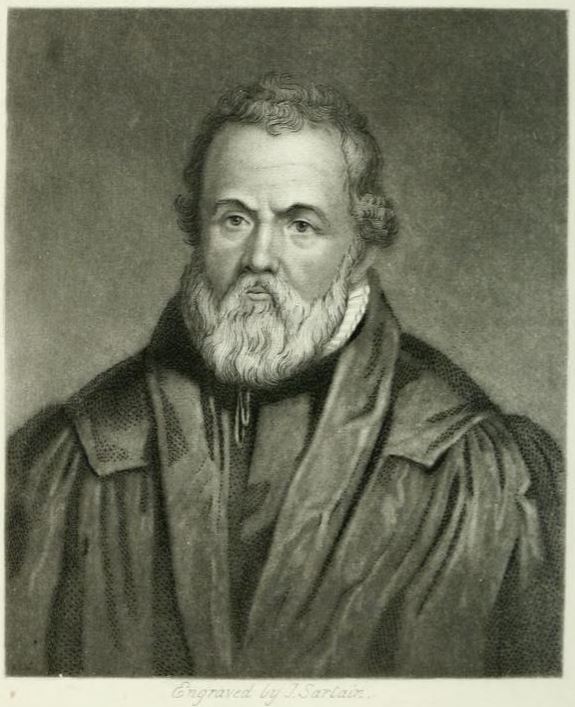
Public Domain
John Bradford was born in Lancashire, England around 1510. He served in the military, studied law and divinity. He was appointed to St. Paul’s Church in London, England and a chaplain to King Edward VI in 1551. His ministry was short lived as was his life. He was martyred at the stake on July 1, 1555.
Generally known for his bold preaching, it was his writing about prayer and his written prayers that caught our congregation’s attention. The two-volume work, The Writings of John Bradford, M.A., Fellow of Pembroke Hall, Cambridge and Prebendary of St. Paul’s. MARTYR, 1555, contains his sermons, meditations and prayers. It is freely available online and is in the public domain.
John Bradford himself translated and edited prayers for use in his day. For example, he translated “A Godlye treatyse of prayer by Philip Melancthon” into English. In his preface to that work, Bradford lamented that the English, like Melancthon’s Germans, knew “too little” about prayer or were “too corruptly” praying. Bradford hoped that his translation of prayer would “nip us and provoke us to pray.”
Using a gardening image, Bradford prayed for his church:
Dear Father,
don’t cut us down.
Let the sweet figs of your sweet gospel remain with us.
Dig and lay your compost about us
so we may bring forth fruit to the praise of your name.
Don’t let the wicked people say, “Where is their God?”
You “are our God in heaven,
and can do whatever you want.”
—“Preface to Melanchthon on prayer,” in The Writings of John Bradford, Cambridge University Press, 1843, p. 21. Public Domain. Language updated.
Perhaps we too need to be “nipped” and “provoked.” These sample prayers might be a help in that regard. For the ease of our modern ear and accessibility, the language in these prayers have been updated and some are also abridged from the original.
You can find more information on John Bradford and his writings on the Christian Classics Ethereal Library’s website.