This is part of the worship series,
"Amazing Love—An Advent Series Based on Hosea"
Series Introduction
Advent 1 | Advent 2 | Advent 3 | Advent 4
Introduction
Reformed Worship sometimes offers churches series of Advent resources that are based on Scripture lessons outlined by the Revised Common Lectionary. In this series the resources take a different, though related, direction. Each year the lectionary follows a different gospel more or less sequentially. The gospels of Matthew and Luke (Years A and C respectively) contain enough narrative about Jesus’ birth or early life to make the direct focus on Jesus every week in Advent preaching natural and relatively easy. Year B uses Mark, the gospel that contains nothing from the early years of Jesus’ life, instead heading directly into the temptation and baptism.
This presents no problem for preaching, since the gospel appears in some form throughout all of the Scriptures. Yet on its own Mark does not make for natural Advent preaching. So for worship planning this year, RW is offering an Advent series that uses preaching texts from the Old Testament prophet Hosea. To a significant extent the suggested services incorporate lectionary sources from Year B for calls to worship, confessions, or praise readings. It is also possible at times throughout Advent to incorporate readings from Year B’s Christmas vigil, particularly if your congregation does not hold a service using those lectionary readings. Such selections would give early exposure to readings pertaining to Christ’s coming in the weeks of Advent. (Non-lectionary suggestions for calls to worship or confession are also included and may or may not be used at the discretion of worship planners.)
A Look at Hosea
Hosea is not a Bible book that springs quickly to mind for Advent worship and preaching. Yet, when we remember the story of salvation, this book of prophecy becomes more accessible. Because the theme of Hosea is that of a lost people being found, of a people being named and claimed again by God, Hosea is an unusual but fitting Advent preaching text. That theme finds graphic and moving expression in the alternately tragic and hopeful autobiography of Hosea, parts of which form the framework for the entire book.
Historically God “came down” in the person of Jesus. But God first “came down” in partial, anticipatory ways when God’s people were given a future and a land. Later they were warned, encouraged, warned again, punished, forgiven, and freed. Today, while we wait for Christ to “come down” again, God’s salvation happens in partial and anticipatory ways—when God’s creatures realize we are valuable in God’s sight, when people come to know Christ spiritually and personally, when we learn to appreciate and care for each other. When such things occur in human life, then people are living in small but visible and concrete ways that reflect God’s boundless love, grace, and mercy. In other words, God wraps us in perfect goodness, no matter how poorly and imperfectly we wear that marvelous clothing.
The readings for the worship services and sermon themes from the book of Hosea have been selected not in the order of the book’s writings, but by theme. Thus, the readings jump around, attempting to capture a thematic rhythm. That rhythm starts with loss of identity and purpose, accompanied by existential agony. Eventually, through God’s persistent intervention, God’s people begin to recover in their personal and communal lives and even show hints of wholeness.
Perhaps a preacher might not resonate to the sermon notes that accompany each week’s suggested worship plan. That doesn’t mean that you can’t use the book of Hosea for Advent. I’ve picked only four passages from Hosea and preached on those. If you are not grabbed by my suggestions, read the entire book, discovering your own themes from Hosea’s gripping words and autobiography.
The suggested preaching passages from Hosea are graphic, showing in experiences of broken human life how God has closely tied himself to humanity. What people do matters to God. God responds. In the writings of Hosea, God responds by inspiring Hosea to live and write, using parts of his own sad family and marital history. There is nothing closer to us than our names, our families—perhaps even more so if we have suffered brokenness in our personal and family relationships.
Series Outline
| Title | Scripture | |
| Advent 1 | God’s Love Rejected | Hosea 1:1-2:1 |
| Advent 2 | All in the Family | Hosea 11 |
| Advent 3 | A Second Honeymoon | Hosea 3 |
| Advent 4 | Flourish Like Grain | Hosea 14; John 12:23–26 |
Preparing the Congregation for an Advent Series on Hosea
Before actually deciding to use Hosea and produce accompanying banners and bulletin covers for Advent, our worship committee discussed the basic ideas of the sermons and services. Encouraging conversation between the worship committee, council, and congregation is an important step in developing real worship and avoiding unsettling battles at a time of the year when we celebrate the coming of the Prince of Peace.
Hope Christian Reformed Church is a congregation that is not highly trained in the visual arts nor, by extension, in the frequent and intentional use of art in worship. I suspect that Hope is not unusual in this regard and may even be rather typical of many congregations. Thus, we needed to create a context in which to use art effectively for the blessing of God’s people and, we pray, for God’s approval.
For the Advent series on Hosea, I sketched theme ideas and discussed them with the worship committee. In turn, the worship committee presented the basic ideas for preaching passages and themes, banners, and bulletin covers to the council a couple of months in advance. Council approved the plans in principal and urged the worship committee to provide a fitting explanation for the planned Advent worship and preaching.
Even though our congregation was prepared a week in advance of the first Sunday of Advent and introduced to the preaching theme via weekly bulletin announcements, the impact of the banners and bulletin covers was profound. I shall never forget the hush with which people entered the worship area upon seeing the banner for that Sunday hanging immediately to the left of the large cross. Astonished murmurs of surprise and expectation followed. “What does this have to do with Advent?” The reactions were to be expected. One council member had not wished to approve the worship themes precisely because at first, they appeared so jarring and unlike Christmas.
And that is exactly the point: Worldly Christmases have indeed removed the drama and seriousness of Christ’s salvation from Christmas. But Hosea’s themes of brokenness, infidelity, and human suffering remind us of the depth of God’s commitment to humanity—the vast divine commitment that compels God to rescue wandering and broken people, families, and communities. These are not themes for adults only; they are, however, utterly crucial issues for everyone who hurts or who has ever had to deal with hurt in the context of God’s ever-faithful promises.
Naturally, then, the preaching themes and banners do not always evoke pleasant feelings. That is only fitting—human disobedience and running away from God should not be pleasant and desirable. Yet we must not shy away from such biblical themes, particularly when such bad news can be followed with hope and hints of God’s greatest news in the full-orbed, muscular salvation that Jesus Christ brought and brings!
Perhaps it is helpful to think that by using such banners and preaching and worship themes, the immeasurable grace and mercy of God are given room to grow in our minds, hearts, and imaginations. They can act as a spiritual vaccine. That is, the slight illness a vaccine often causes as part of the physiological process of making a person immune to a fatal illness is much preferable to the often-fatal illness itself—and, in the long run, makes us more appreciative of our health. In analogous fashion, the series of Advent messages on Hosea might remind us (in Heidelberg-Catechism style) that we need to know our sin before we can appreciate our salvation and health.
Drama idea: “Gomer”
In a sassy yet tender manner, Hosea’s wife Gomer talks about the crazy prophet who married her, gave strange names to her babies, and bought her back again after she’d left him, thus leading her to his God. “Gomer” is a 10–15-minute monologue found in Searching for Shalom: Resources for Creative Worship by Ann Weems (Westminster/John Knox Press, 1991). “O My People, Turn to Me” Post is a fitting song after the drama.
Explanation of Worship Bulletin covers/Banners
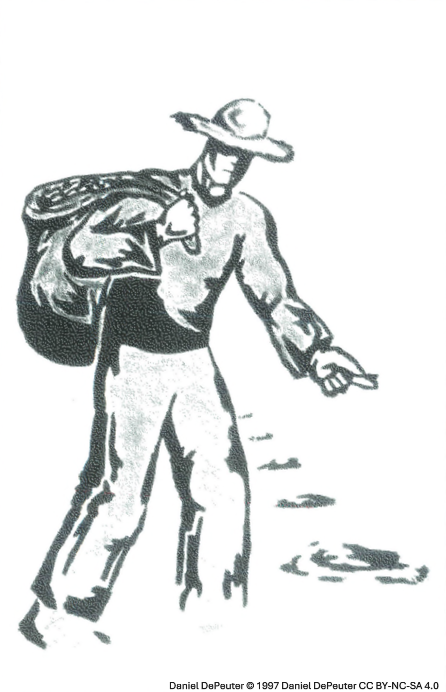
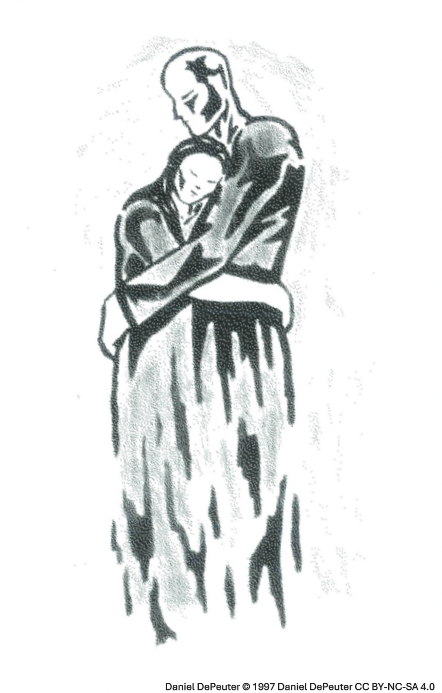
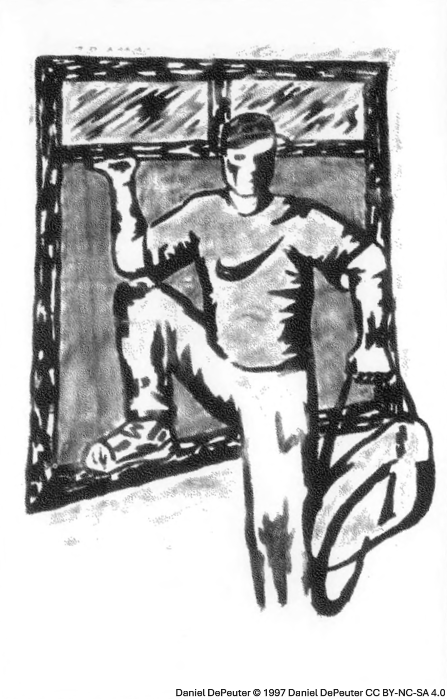
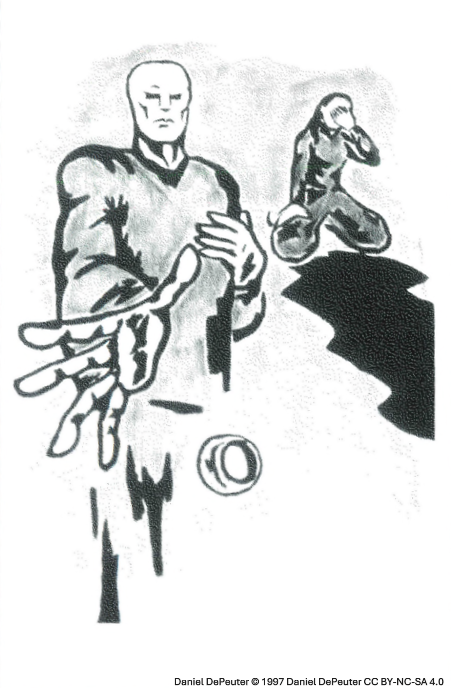
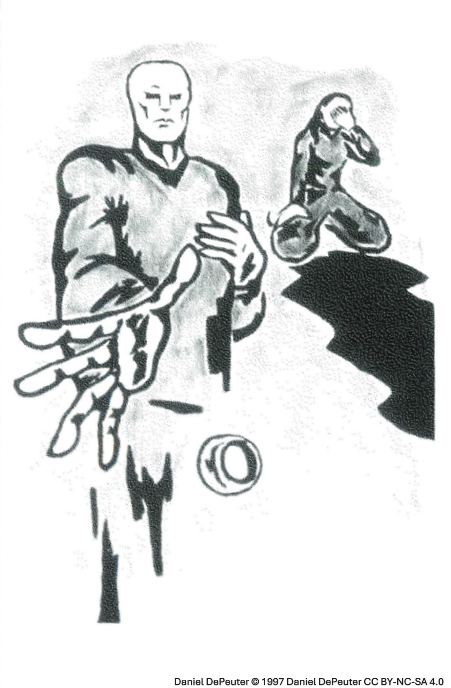
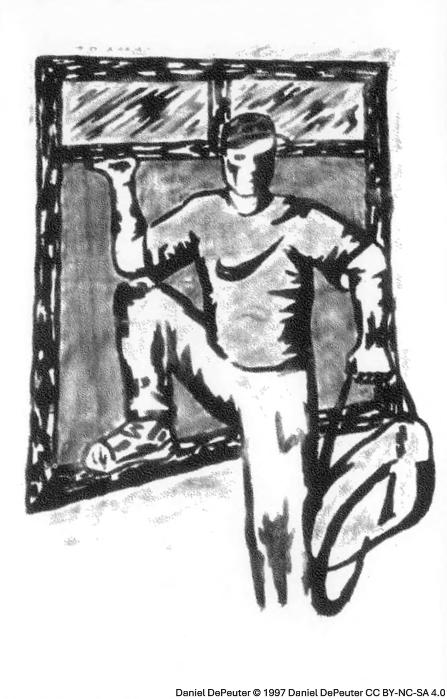
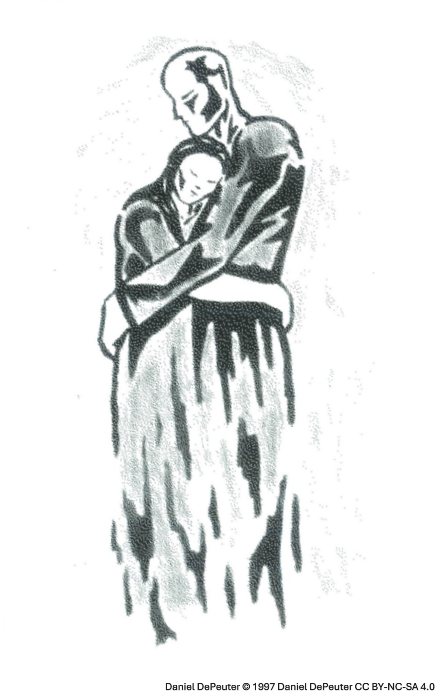
Our imaginations should be stirred by reading and meditating on ancient texts taken from Israel’s history—in this case the book of Hosea. Perhaps contemporary graphic art can help to open our spiritual eyes and ears and senses to how God remains involved with the world and its people still today. Thus, the suggestions and guidelines for Advent worship services are accompanied by bulletin covers that include the art that the worship committee of Hope Christian Reformed Church, Thunder Bay, Ontario, used as it developed these services in Advent 1997.
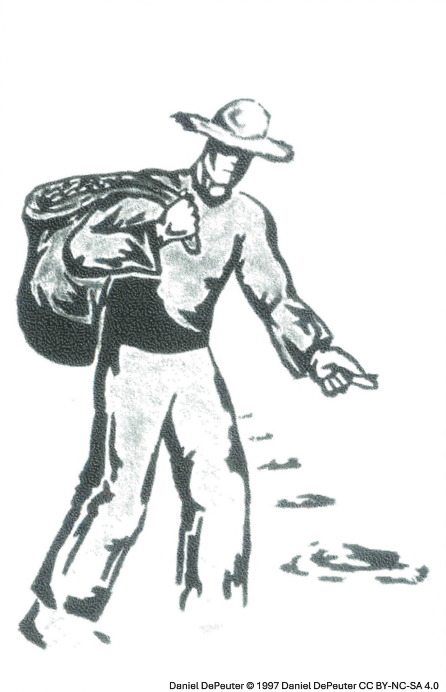
In order to grasp some of the powerful, unsettling images used by Hosea, the pictures are intentionally stark in their style. When we transformed them into banners we used heavy linens, harsh expressions. These banners were the product of several conversations with Hope CRC member Daniel DePeuter, then a nineteen-year-old art student at ThunderBay’s Lakehead University. Daniel and I went through the planned preaching passages some weeks before the start of Advent. We discussed the themes and possible images that could express the theme faithfully, simply, yet (we hoped) memorably.
Daniel then drew several sketches, and together he and I decided which would be used each week. That original sketch was photocopied for use as a bulletin cover. Daniel and his mother, Ena DePeuter, later transferred the small sketch to a full banner-sized piece of muslin. Already the first week they decided that the banner presentation would be more vivid and effective if the banners were finished in a few colors painted on the muslin. The bulletin covers remained black and white.
Factors that are always important to consider in worship planning are the cost and use of resources. As you can tell from the description of the banner- and bulletin-making processes, we used a minimum of money and materials creating these visuals for Advent. Tempera paints are in expensive, and the muslin itself is reuseable; because it accepts (up to a certain limit) a number of coats of paint, it can be used in other seasons to produce completely different banners. And that’s what we did. Due to the nature of Hosea’s message, I knew it would be unlikely that our congregation would use that book anytime soon during another Advent. So now, two years after they were used, the original banner shave been painted over and used in different worship planning projects.
Readers of Reformed Worship are permited to reproduce and use the images accompanying this series as bulletin covers or slides. They are available for download in the resource section below. Be sure to use the following copyright line: Daniel DePeuter © 1997 Daniel DePeuter CC BY-NC-SA 4.0.
Additional Resources
Should you decide to use or adapt these worship services and themes from Hosea for Advent, you may well be interested in consulting a couple of commentaries that I have found helpful on Hosea.
- The Interpretation series is geared particularly toward preaching and preachers. The volume by James Limburg on Hosea (Hosea-Micah: Interpretation—A Bible Commentary for Teaching and Preaching, Atlanta: John Knox Press, 1988) offers sterling, sometimes technical, scholarship for background textual understanding. At the same time it embraces the text itself and stimulates life-connected preaching themes.
- A much older work, Love’s Complaint (translated by Theodore Plantinga, Paideia Press, St. Catharine's, Ontario, 1988), by Dutch pastor-theologian Herman Veldkamp, provides a book-long series of meditations on Hosea. Those meditations are typical of the warm, yet tough, realistic and spiritually disciplined insights from God’s Word that have marked preachers of the Reformed tradition.