This is part of the worship Series:
Focus on the Father
Series Introduction
Week 1 | Week 2 | Week 3 | Week 4
Drama: The Wayward, Wasteful Daughter
Introduction
This series of services based on the parable of the prodigal son was developed by Rolf Bouma when he was co-pastor of Eastern Avenue Christian Reformed Church of Grand Rapids, Michigan. He was influenced by Henri Nouwen's The Return of the Prodigal Son and Robert Farrar Capon's The Parables of Grace. Bouma also acknowledges contributions by others in churches where he preached this series, including copastors Leonard Vander Zee and Roy Berkenbosch at Eastern Avenue and Paul Brink and Charlotte Larsen of the Ann Arbor (Michigan) Christian Reformed Church.
The sermon excerpts are meant to give a general direction. Note that the series comes to its most crucial moment in the third week, when the focus is upon the Father. It works very well to divide the sermon into two parts, the first illuminating the gracious character of God, which goes against our intuitions, and the second using Nouwen's insight that our strongest identification with the parable needs to be with the Father, not either of the sons.
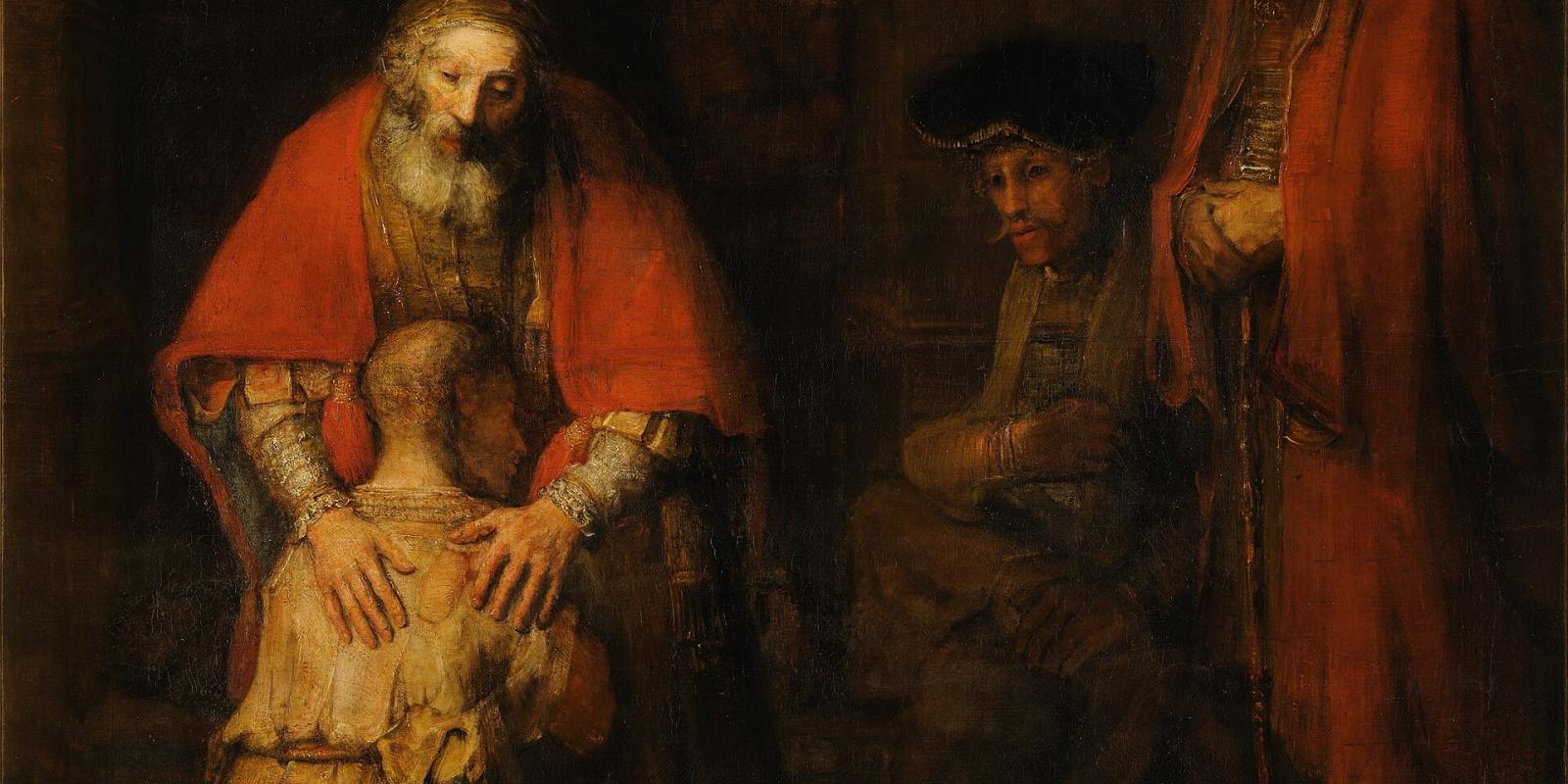
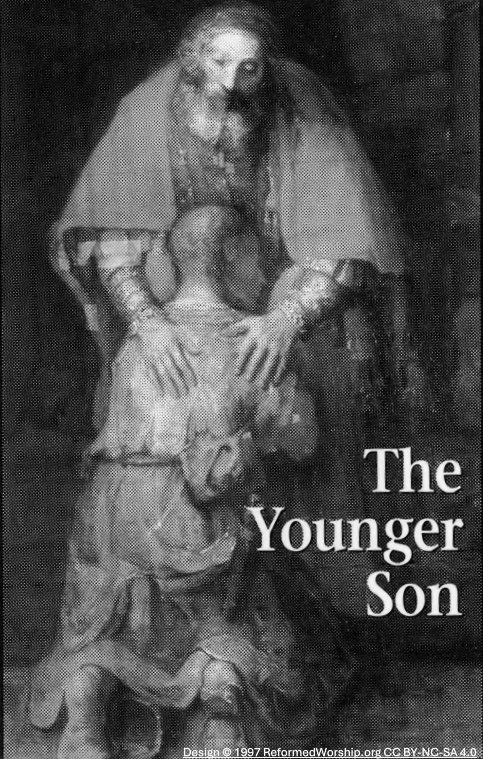
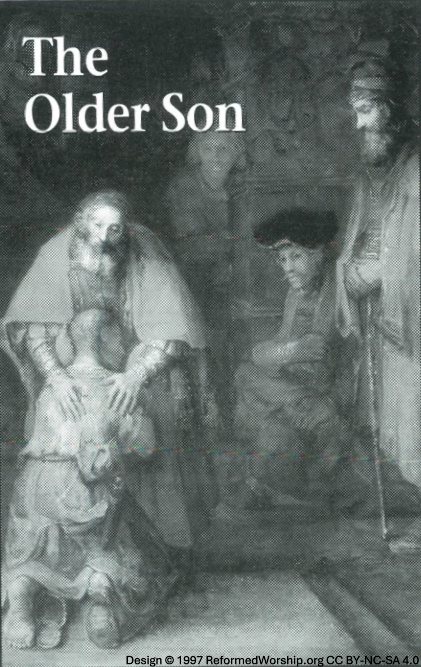
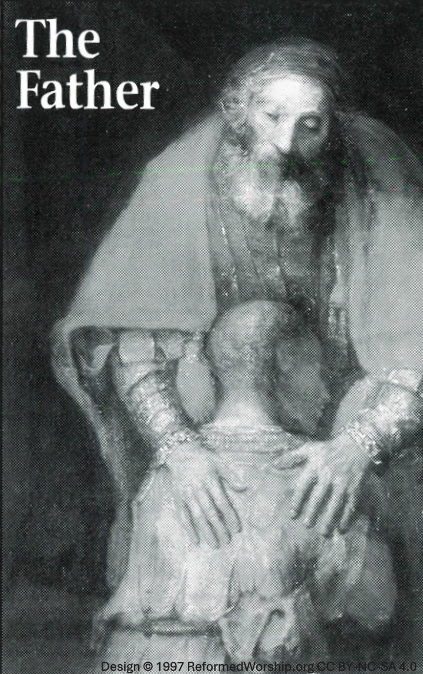
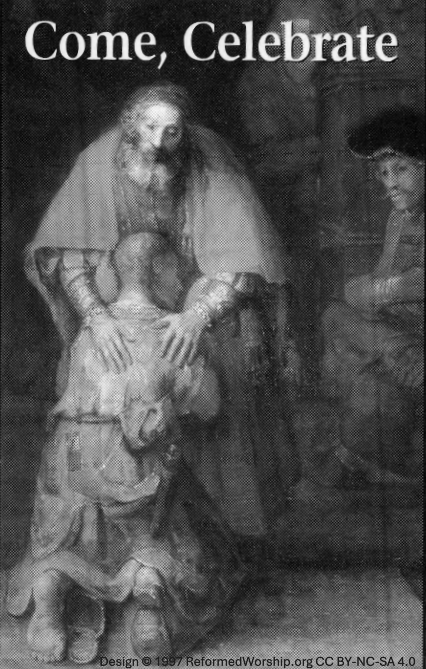
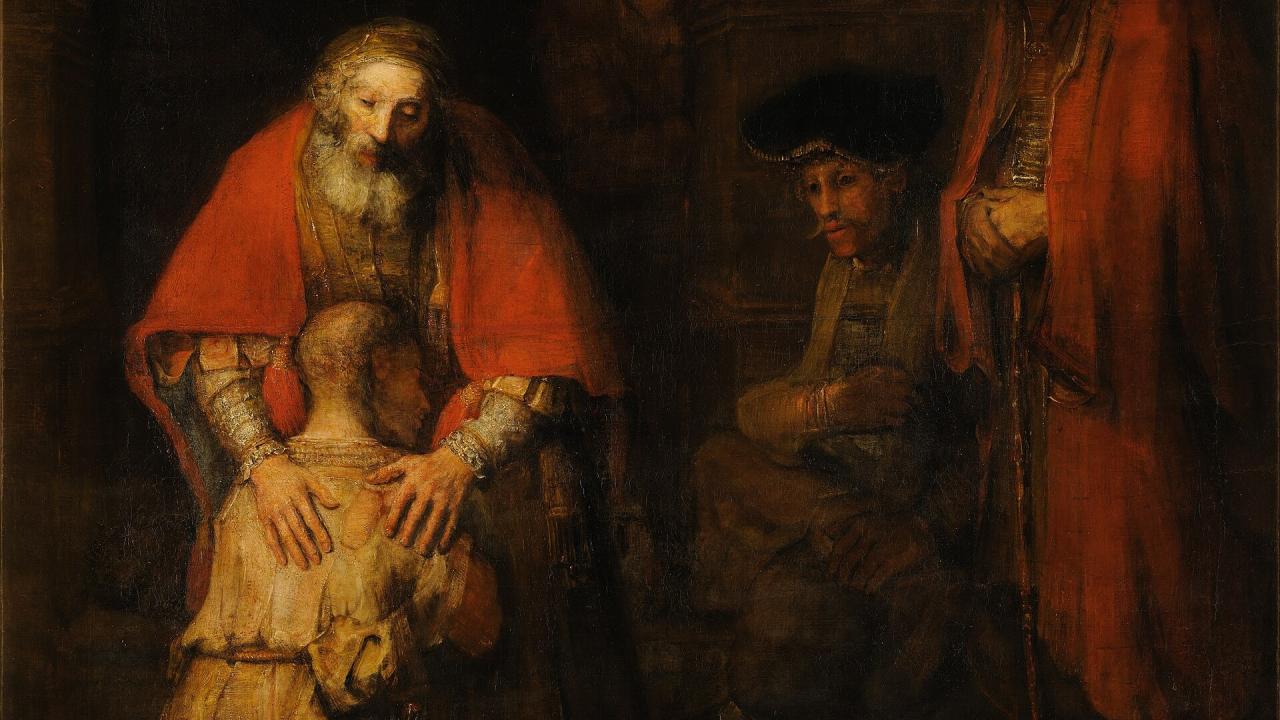
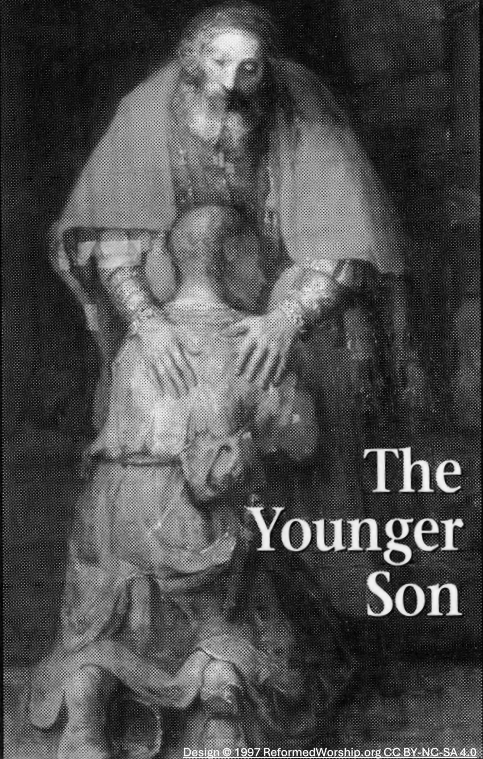
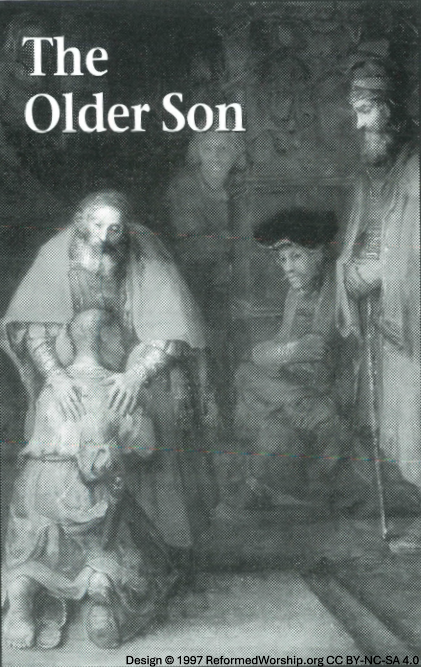
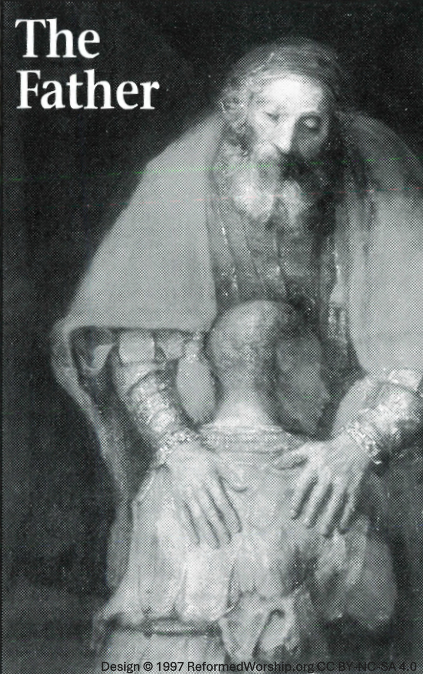
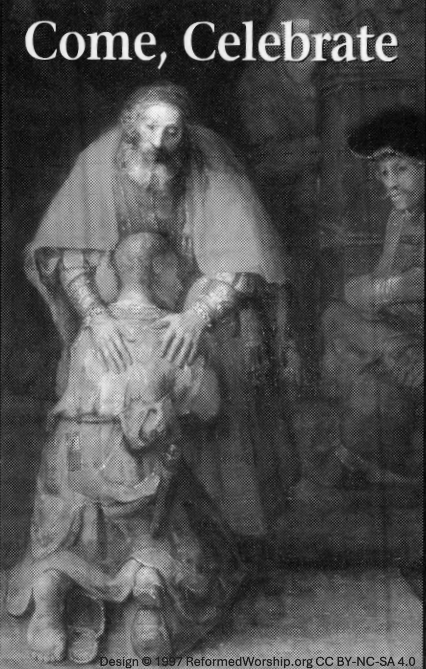
The painting The Return of the Prodigal Son is by Rembrandt, and can be found in most collections of Rembrandt's works. Henri Nouwen's book provides an excellent commentary on the painting. The bulletin covers for this series provide different focal points in the painting that correspond to the focus of the different weeks. These are available for download in the resource section below using the following copyright line: Design © 1997 ReformedWorship.org CC BY-NC-SA 4.0.
Series Outline
| |
Sermon Title |
Scripture |
Bulletin Cover |
| Week 1 |
The Younger Son |
Luke 15:11–32 |
|
| Week 2 |
The Elder Son |
Luke 15:25–32 |
|
| Week 3 |
The Father |
Luke 15:11–32 |
|
| Week 4 |
Come, Celebrate |
Luke 15:1–32 |
|
THROUGH NOUWEN'S EYES
In 1993, Henri Nouwen, Dutch Catholic priest, scholar, and author, gave the Bowen Lecture at the Kanuga Conference Center in Western North Carolina. Tom Ehrich, one of the church leaders who attended, describes his memories of those speeches:
Henri Nouwen talked with his hands. He told stones, mostly about himself. Most of all, I remember a story told and a story lived.
Henry told about being invited to visit The Hermitage in Russia to see Rembrandt's "Return of the Prodigal." Other viewers filed by at a rapid clip, but he was allowed to sit in a chair for two hours and just look. He looked at the figures in the background, the father and the broken son.
The father had both hands on the boy's shoulders. One hand was the gnarled hand of a working man. The other, Nouwen said with a dramatic pause, was the delicate, tapered hand—"of a woman"! God suddenly became larger for this Catholic priest.
It was a stunning moment. Over four hundred people—power people, mostly—looked through Nouwen's eyes and saw the feminine nature of God. People wept.
Later, as Nouwen told about the L'Arche Daybreak Community in Toronto, where he served, he told about his friend Bill, a mentally handicapped man who was in the scholar's care.
Bill was on the stage with Henry, as was a nun from Daybreak. When Henri invited Bill to come to the microphones and speak, I remember thinking that people had come a long way to hear the Dutch scholar, not Bill.
To give Bill support, Nouwen stood next to him at the microphone. Bill was overcome by the prospect of speaking. He simply laid his head on Nouwen's shoulder and wept.
A room filled with church leaders suddenly glimpsed the incarnate nature of true ministry. Our work isn't about liturgies that we fight over, buildings that we fight over, books of worship that we fight over, hymnals that we fight over, small bits of institutional power that we fight over, or doctrines that we are willing to kill over. Our work is to stand next to one another and provide a shoulder for weeping.
—Used by permission of Religious News Service.
Revised Common Lectionary
Year C: Lent—Fourth Sunday in Lent
Year C: Season after Pentecost—Proper 19 (24)