This is part of the worship series,
"God in Three Persons"
Series Introduction
Week 1 | Week 2 | Week 3 | Week 4
Introduction
My children still can’t believe that I am unable to discern the three-dimensional image in a magic-eye picture. “Dad, go like this,” they advise, looking at the picture cross-eyed, or touching their nose to the surface and backing up slowly. But no matter what I try, still no image. Only a vague sense of failure and frustration. “Don’t worry, Dad,” they say with a sympathetic pat on the shoulder, “you’ll get it one day.”
Seeing the Trinity can be a similar challenge. Search the Bible cover to cover and you’ll not find the word Trinity anywhere, not even once. Even more difficult is discerning the Trinity at work in our daily living. Yet the Trinity has its fingerprints all over the Bible and is active in our personal lives. In New Testament times, awareness of the Trinity was not a neatly articulated doctrine, as found today in the Athanasian Creed. Instead it was a living reality that God’s people encountered. Historian Eugene Oosterhaven comments that belief in the trinitarian form of God “did not emerge merely from the study of some church father, or because of a pronouncement from a church council; it arose in the experience of the people when God had made himself manifest in a new way.”
The intent of this four-week series of service ideas is to help your congregation see the Trinity in Scripture and experience the Trinity in their lives. Jesus prayed that all believers “become one in heart and mind—just as you, Father, are in me and I in you, so they might be one heart and mind with us” (John 17:21, The Message, Eugene Peterson). This relational analogy, with its invitation to draw the congregation personally into trinitarian life, serves as a theme in this series.
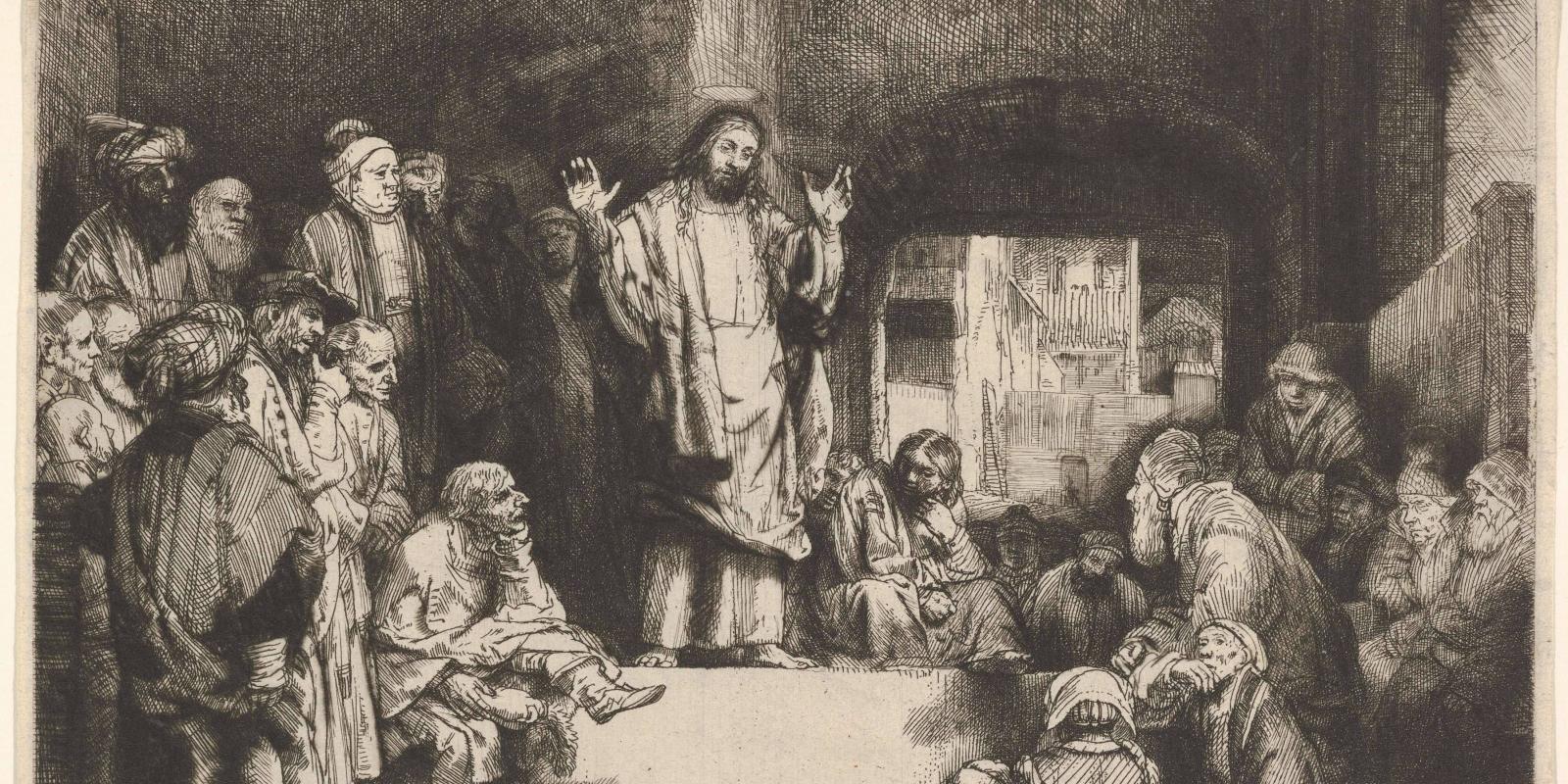
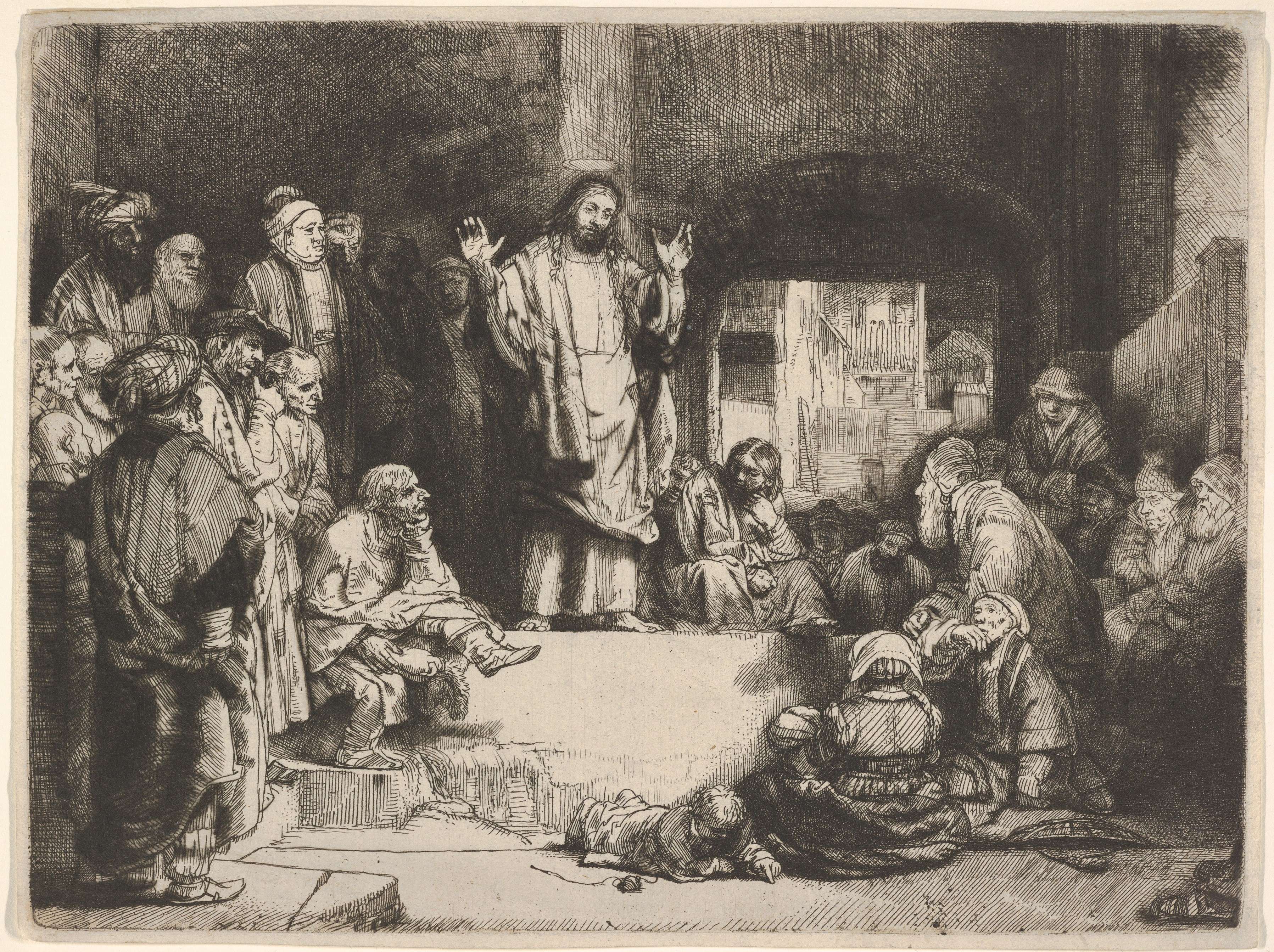
The Trinity is much closer than we think. To help us see its intimate proximity we will study an etching by Rembrandt van Rijn (1606-1669). In his book A Critique of Christian Art, Calvin Seerveld cites Rembrandt as one artist whose philosophy and artistic expression are an example of thoughtful Christian art. At first view we do not detect the Trinity in this picture, just as we do not discern it overtly in our daily circumstances. But it is there! All we need to do is take the time and thought to see it. Although a variety of Bible passages are suggested, most of the following thoughts are based on John 16–17. Our goal is to help our fellow believers get the trinitarian picture.
Series Outline
| Sermon Title | Scripture | |
| Sunday Before Ascension | God the Father | John 16:25-28; John 17:1-3, 20-21 |
| Ascension Sunday | God the Son | John 16:16-24; John 17:1-11; Acts 1:1-11 |
| Pentecost Sunday | God the Holy Spirit | John 16:12-15; Acts 2 |
| Trinity Sunday | The Triune God | John 16, 17 |
Revised Common Lectionary
Years A, B, C: Easter—Seventh Sunday of Easter
Years A, B, C: Easter—Ascension of the Lord
Years A, B, C: Easter—Day of Pentecost
Year C: Season after Pentecost—Trinity Sunday