This is part of the worship series,
"Grounded and Growing—Bearing Fruit”
Series Introduction | Ascension Sunday | Pentecost
Love | Joy | Peace | Patience | Generosity & Kindness |
Faithfulness | Gentleness | Self-Control | Communion Liturgy
Also in this year-long Grounded and Growing series:
Advent and Christmas | Epiphany | Lent and Easter
|
|

|

|
|
|
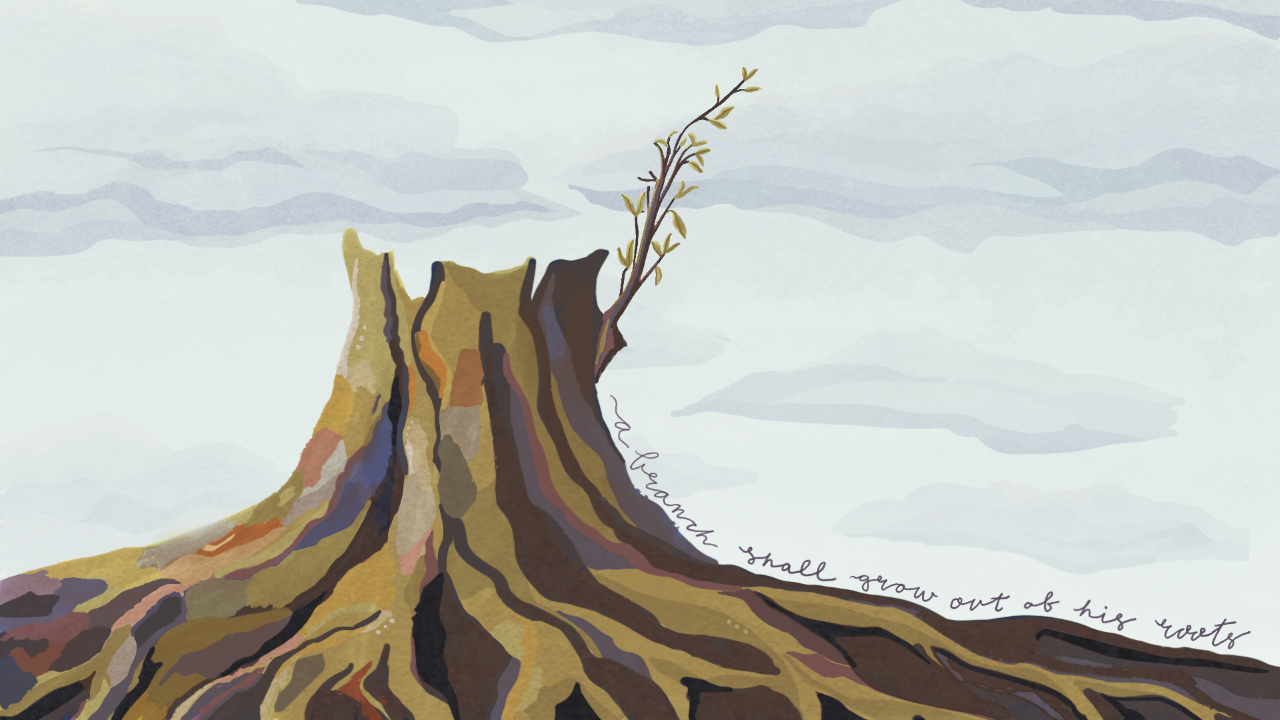
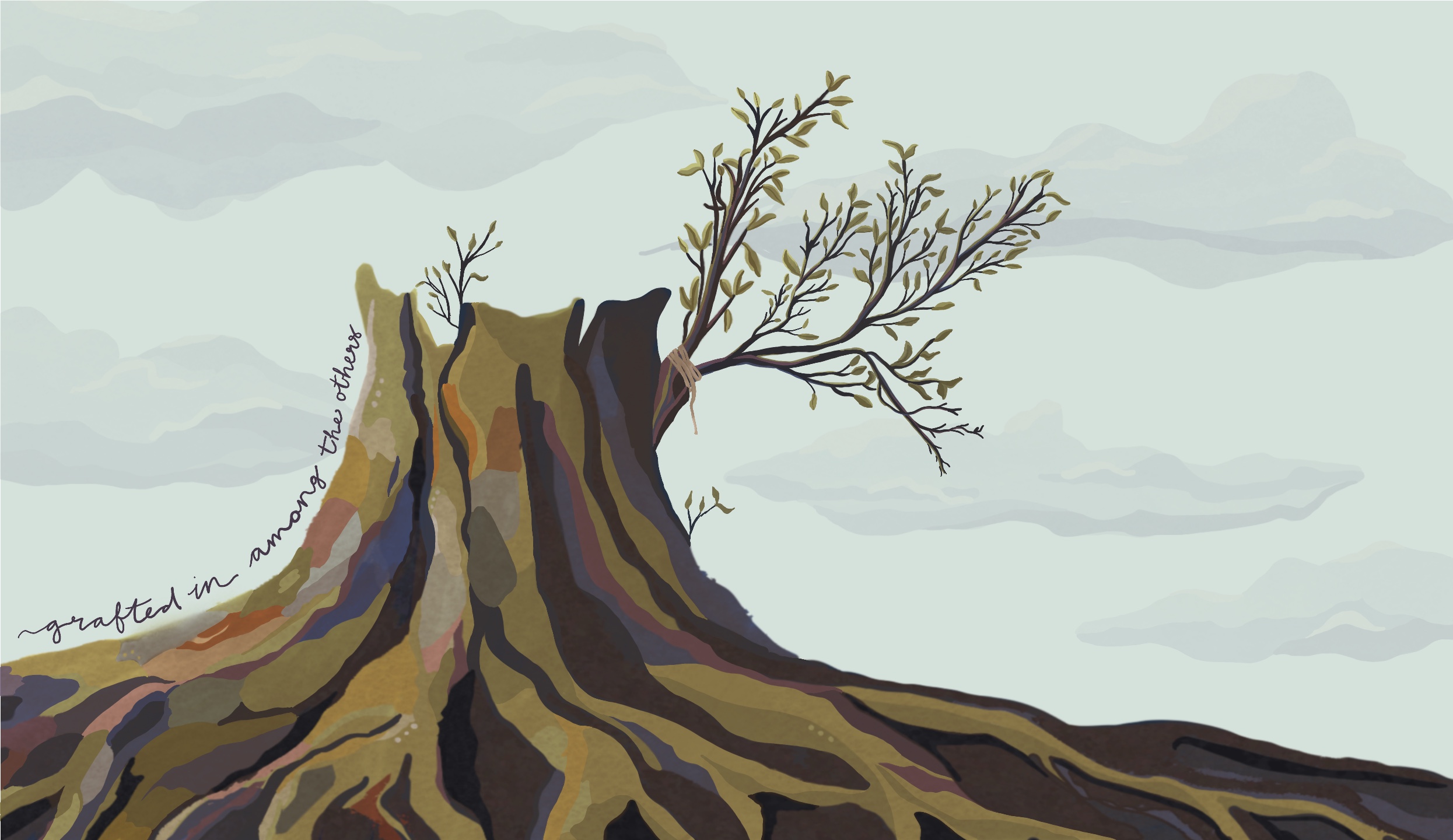
If you followed this entire series you know that we began in Advent with a stump out of which a branch grew. This biblical symbol of hope reminded us that life is still possible, even when all seems hopeless. The source of that hope is Christ who is the new life, the one branch from which others grew. As we progressed to Epiphany, we saw that people from all over the world are grafted into Christ, united with him.
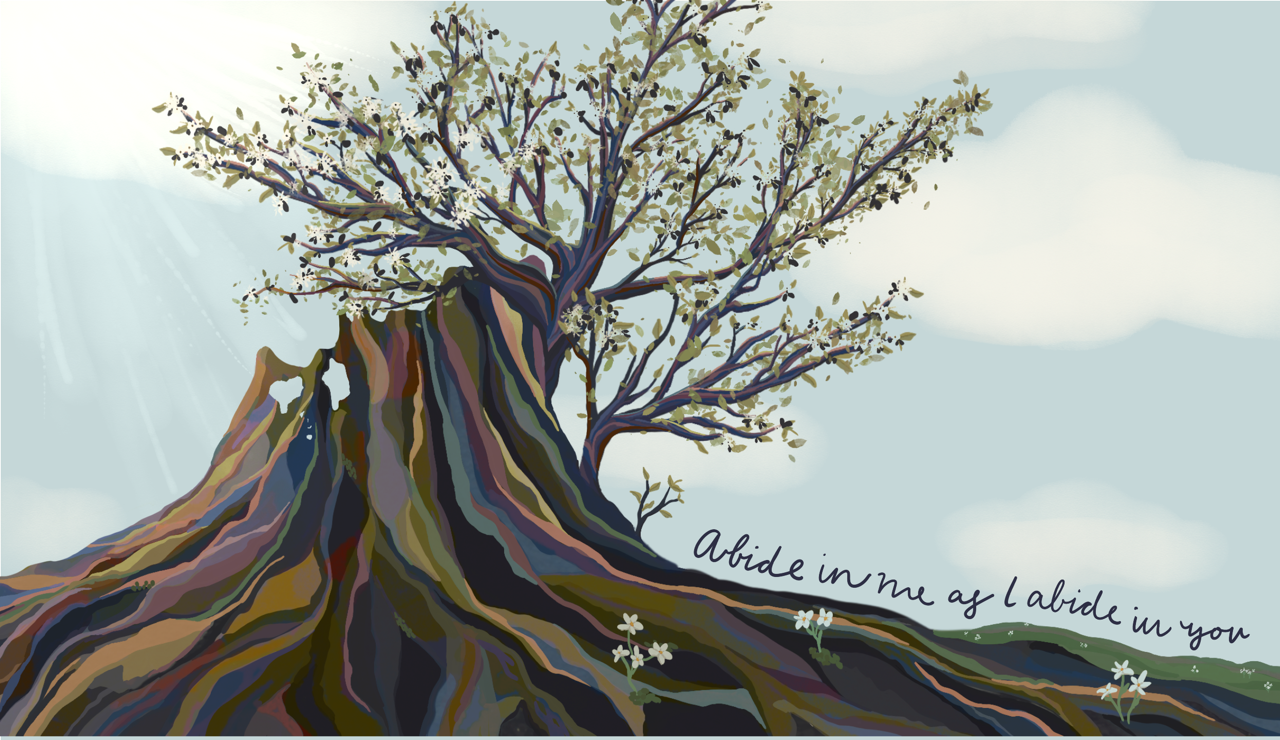
Yet, not all is right with the world. On Ash Wednesday we were confronted once again with death, with the stump reduced to ash. But the fire that burns is a refining fire, a death from which life rises. Indeed, as we journeyed throughout Lent, we did so with hope, a hope rewarded on Easter when the branch flowers. Christ has arisen, new life bursts forth from the grave.
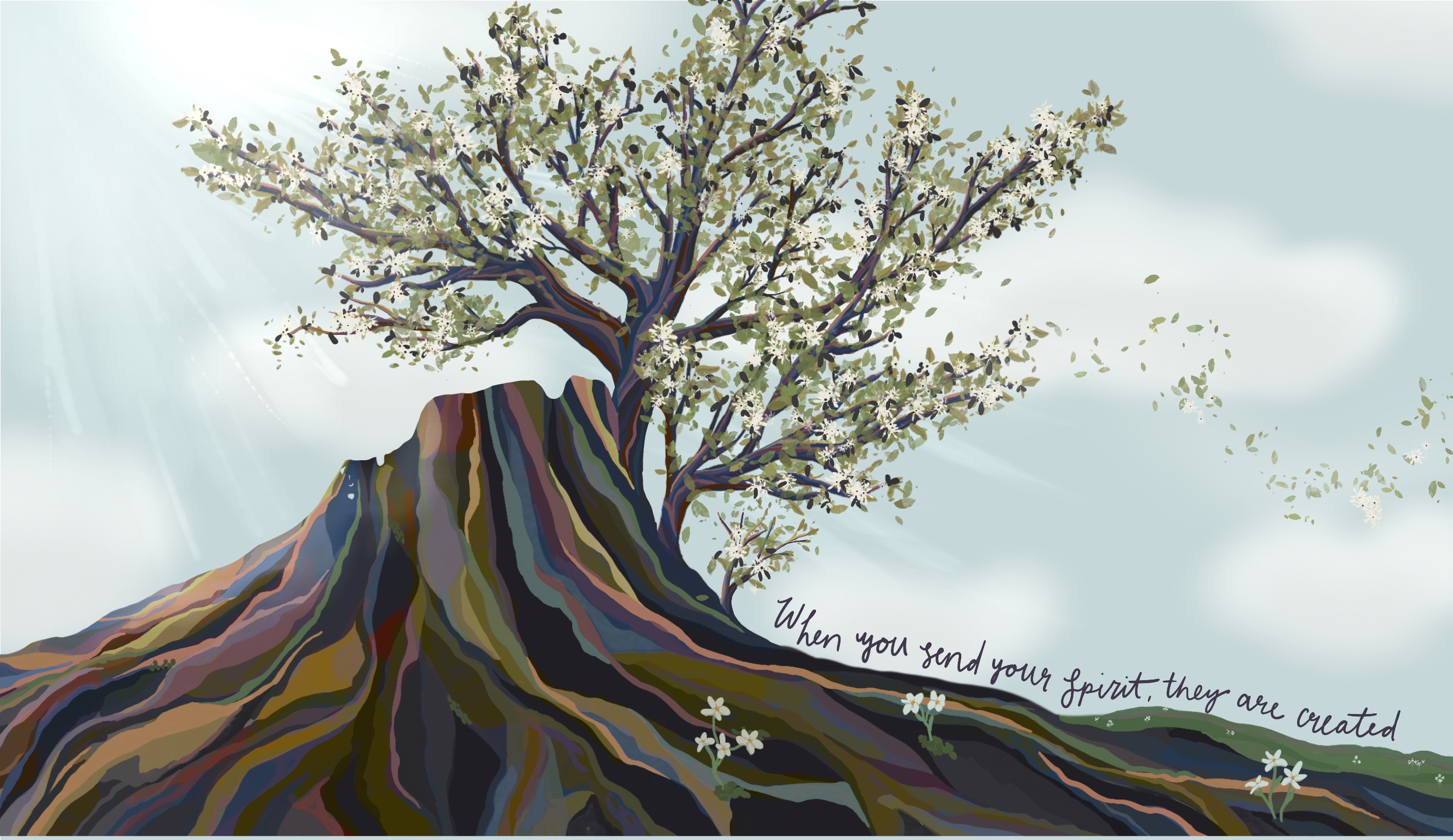
From the flower comes fruit which provides nourishment and sustenance. Whether or not you have been using this series since Advent, you can join in now as we celebrate the fruitful branches. Ascension Day or the following Sunday, we celebrate the reality that Christ has ascended into heaven, the first fruit. On Pentecost, those who are joined with Christ are given the Holy Spirit as a guarantee of the fullness of life to come, even as the Spirit causes us to bear the fruit of life and peace in ever increasing abundance.
In some Christian traditions the nine days between Ascension Day and Pentecost are spent focusing on the Fruit of the Spirit (see: The Fruit of the Spirit—Connecting Ascension and Pentecost). In this series, we have chosen to focus on the Fruit of the Spirit over an eight-week period.
When we think of lists, we often think of a list of things we have to remember or do. Grocery lists, chore lists, lists of names or dates to memorize for a test.
So when we come to the Fruit of the Spirit, it’s easy to think of this list of characteristics as another “to-do” list. As if Paul is saying to us each morning “Don’t forget to practice all these things today—be peaceful at 9am, joyful at 11, and be sure to work gentleness in there before dinner.”
While the Fruit of the Spirit are characteristics we’re called to embody, Paul makes it clear in Galatians 5 that this list isn’t a to-do list, but a promise. Those who live by the Spirit will bear good fruit. This fruitfulness isn’t the result of self-effort and personal striving, but comes by abiding in Christ, as a branch to a vine, that we might experience the life-giving power of the Holy Spirit.
How do we abide in Christ? One of the key ways we seek to dwell in Christ is through prayer. In each of these services is the invitation to do a breath prayer with your congregation. You can do this wherever it makes sense for your community—I’ve placed it before the Prayers of the People. These are simple prayers where the congregation breathes slowly, as the leader invites the Spirit's presence to fill our lives (as we breathe in) so that our lives might bear good fruit (as we breathe out). Each prayer can be repeated a few times.
Also included with this series is a communion service and a downloadable image (coming soon).
The Series
SERVICE |
SCRIPTURE |
THEME |
| Ascension Sunday |
1 Corinthians 15:20–26 |
“The Vine and the Branches” |
| Pentecost |
Acts 2:1–4, 14a, 22–24, 32–39 |
“The First Fruits of the Spirit” |
|
Matthew 22:34–40 |
“The Greatest of These” |
|
|
John 16:16–24 |
“The Joy that Abides” |
|
|
Isaiah 11:1–9 |
“Those Who Sow in Peace” |
|
|
Lamentations 3:22–33 |
“Bearing With One Another in Love” |
|
|
Luke 10:25–37 |
“The Life that is Truly Life” |
|
|
Matthew 4:1–11 |
“By Faith” |
|
|
Psalm 23 |
“Don’t Worry; Be Gentle” |
|
|
Mark 9:42–50 |
“The Trellis of Self-Control” |
|
About the Image
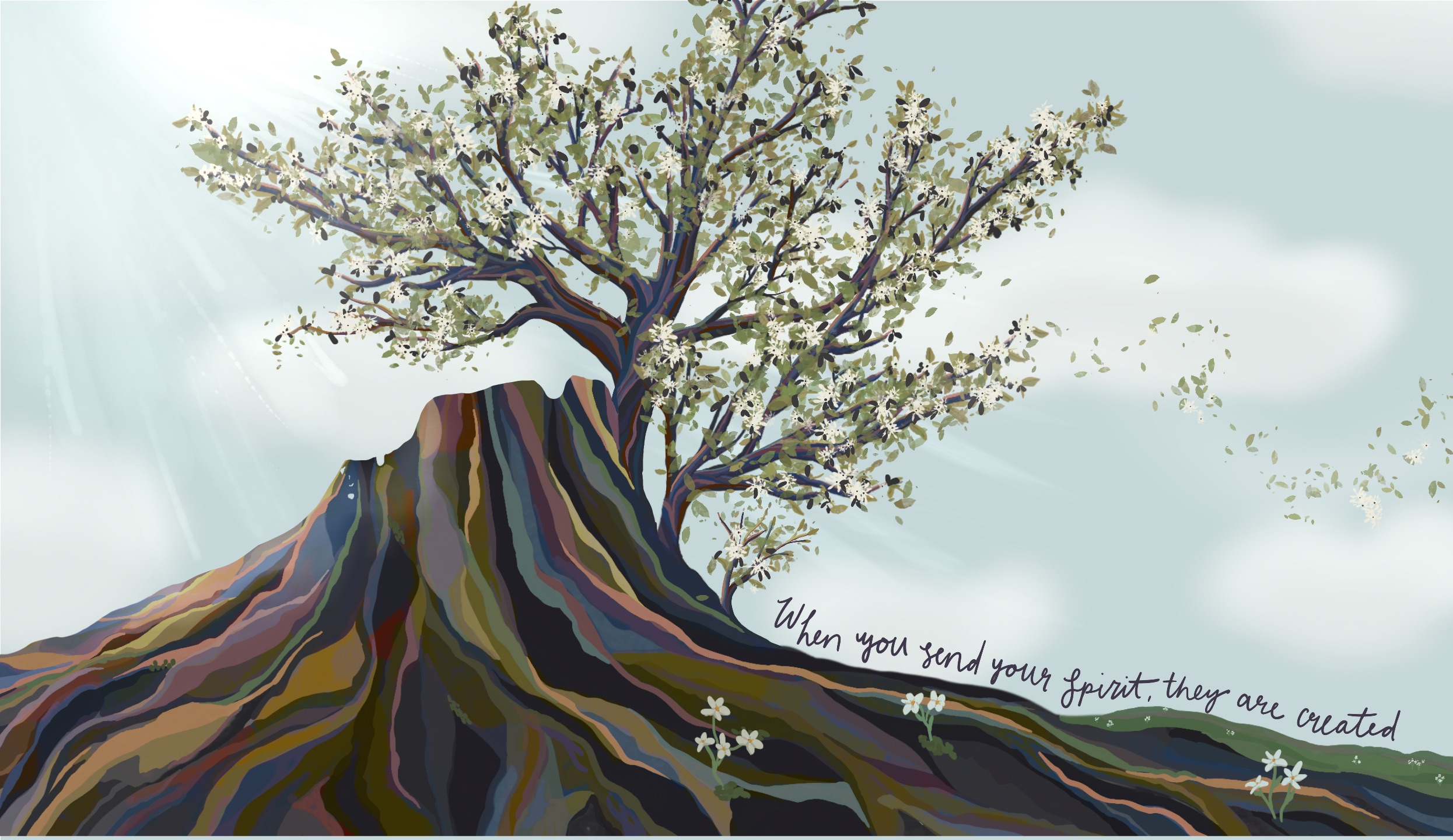
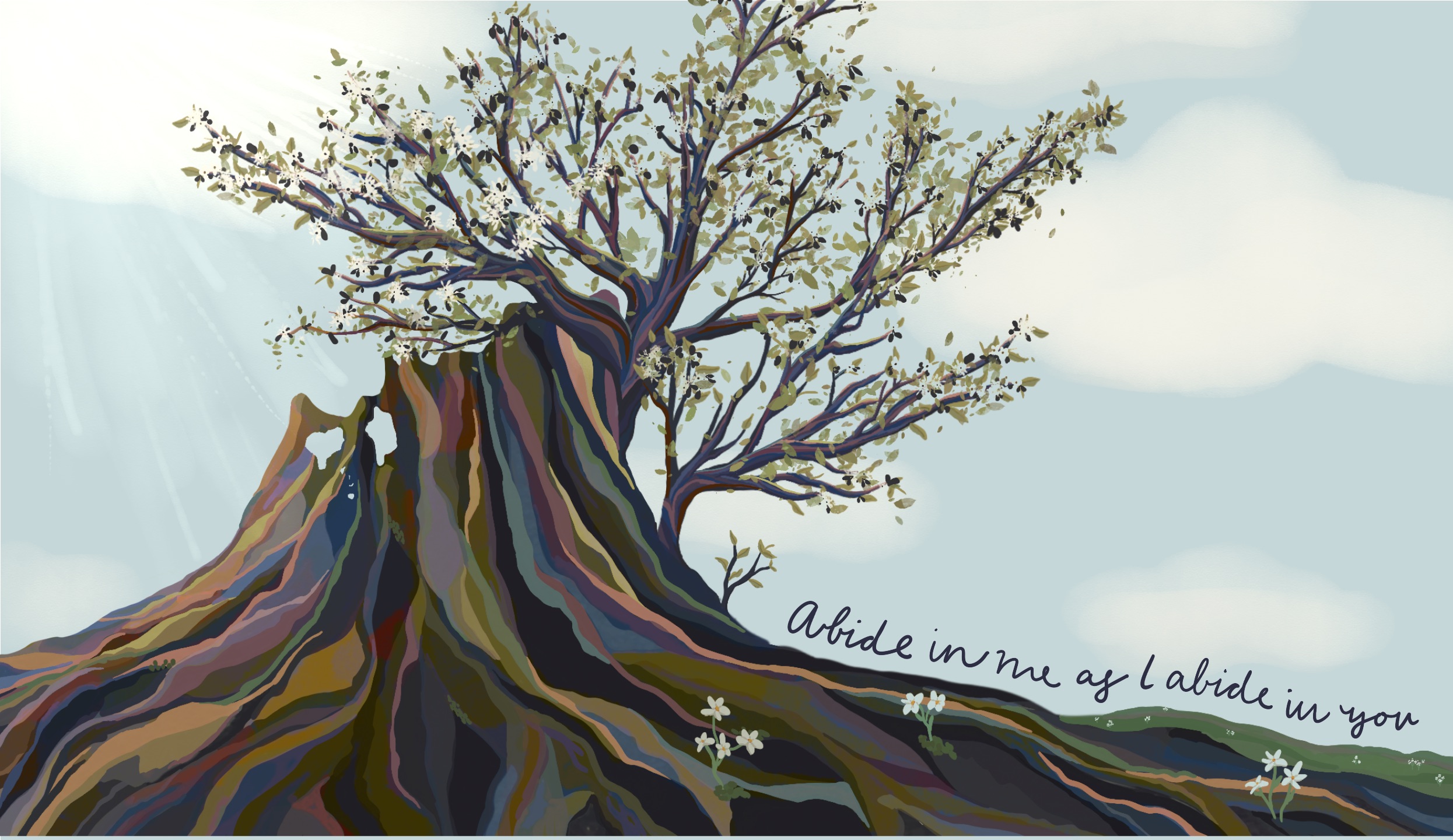
The artwork, created by Calvin Institute of Christian Worship's staff member Emma Oehler for the Lent installment of the Grounded and Growing series, is available for download below. Throughout this series, the olive tree serves as a central visual metaphor, showing progression through stages of growth: a shoot emerging from the tree (Advent and Christmas), a branch grafted onto the tree (Epiphany), pruning (Lent), flowering branches (Easter), and the bearing of fruit (Ascension and Pentecost).
The olive tree was chosen for its biblical resonance. It is one of the few trees in Scripture explicitly described as both flowering and fruit-bearing. In addition, olive branches hold deep symbolic meaning in the biblical tradition, representing peace and reconciliation. They are also key to the flourishing of the people of Israel, providing oil for lighting and cooking, food, and shade.
This artwork is made available under a Creative Commons Attribution. You are free to share and adapt the work for non-commercial purposes, provided proper attribution is given to Reformed Worship. (Emma Oehler © 2026 ReformedWorship.org, CC BY-NC-SA 4.0. Used by permission.) The image can be adapted to fit your needs for bulletins, social media, or projection.