This is part of the worship series,
"Pictures of the Kingdom”
Series Introduction
Week 1 | Week 2 | Week 3 | Week 4
Week 5 | Week 6
Second Week
Parable of the Vineyard Workers: Grace—Matthew 20:1–16
The Parable
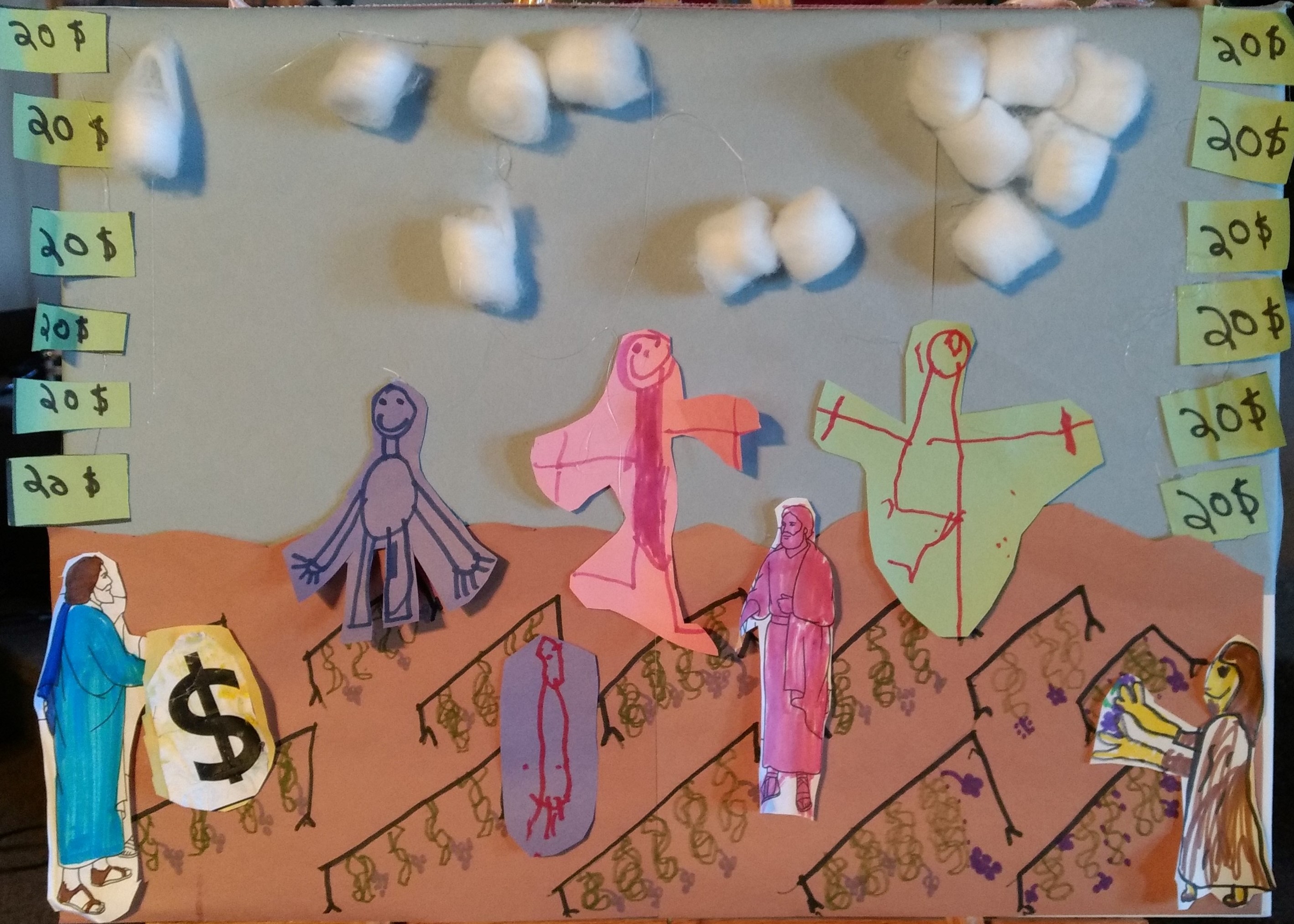
A landowner hires workers to labor in his vineyard. Some he hires early in the morning, others at noon, and still others late in the day. When the day is finished and the workers gather to pick up their pay, each worker receives exactly the same amount. Understandably, this upsets those who have worked for the full twelve hours. When they complain to the landowner of this ostensible injustice, he answers them in a way that reveals a key characteristic of the kingdom of God.
Picturing the Story
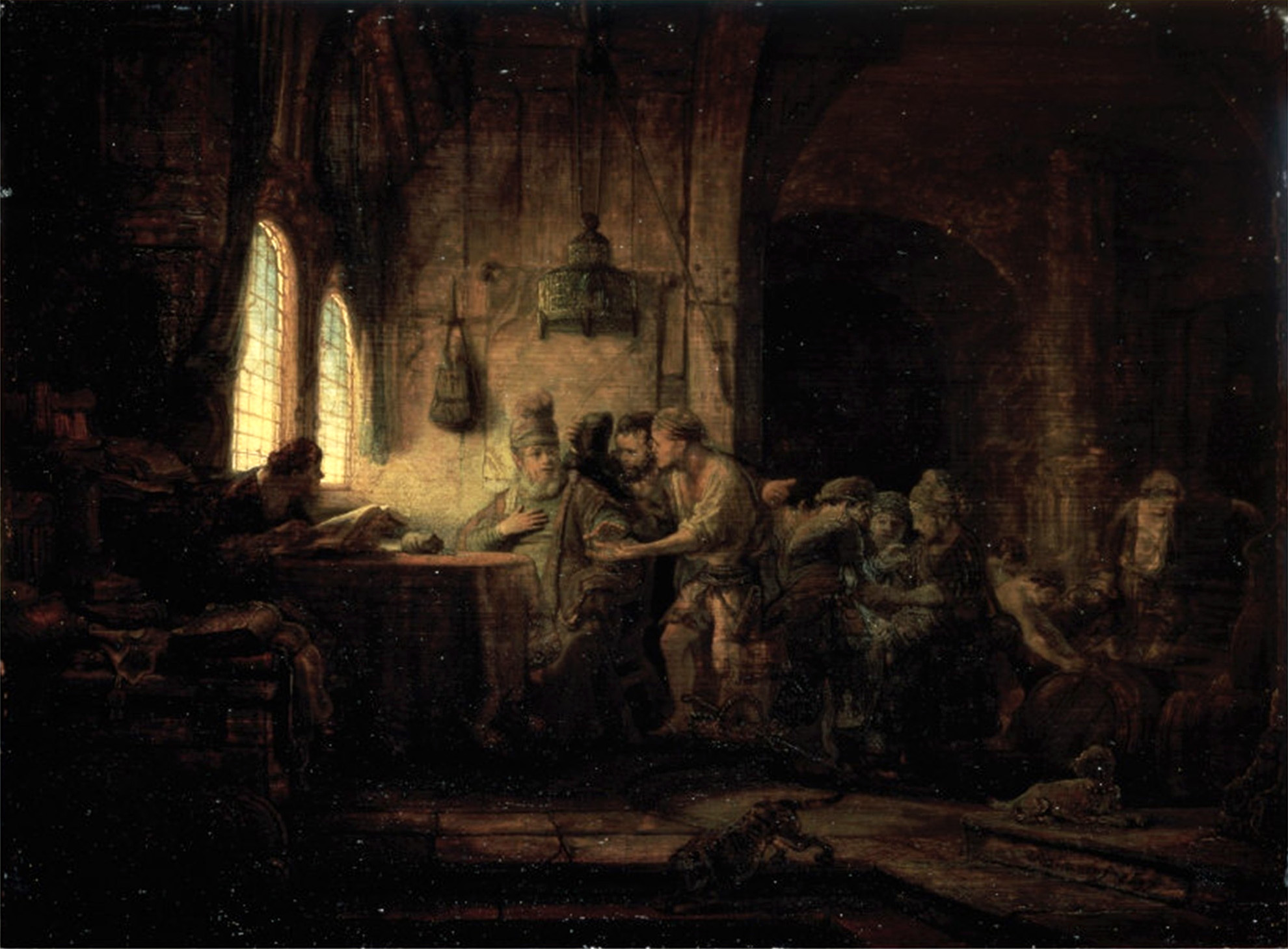
Rembrandt van Rijn’s Parable of the Labourers in the Vineyard (1637) captures the moment the disgruntled employees are bringing their complaint. The benevolent owner is seated at the center of the painting, highlighted by rays of light streaming in from the window. His hands help tell the essence of the story: One is over his heart, the other open and giving, indicating the payment he has generously distributed to all employees. The workplace is filled with soft, warm, glowing light that reveals a place of blessing and prosperity for all who are part of it. This is the atmosphere of the kingdom, grounded in the owner who sets the tone for all the rest. From his heart emanates a prevailing spirit of benevolent grace. Rembrandt may have implied some humor in the story. Look closely at the facial expression of the owner. He seems a little surprised at the complaint being brought forward, as if to say, “I don’t understand your problem. I’m just being generous! Who would have a problem with that?” He seems to take delight, even glee, in being extravagant.
Applicatory Thoughts
The unexpected feature of this story is that all workers receive the same remuneration no matter their hours of effort. This clearly is not how one would run a successful business in the real world. But the point of the parable is just that: The kingdom of God is not like anything in the real world of business, ledgers, payrolls, time clocks, or pay commensurate with work rendered. Things are completely different in the kingdom. In Matthew this parable is bracketed by Jesus saying, “The last will be first, and the first will be last” (Matthew 19:30; 20:16). This tells us, among other things, that the kingdom of God operates on truths foreign to human logic and the workaday world. In a phrase, we live in a place of grace. Our entrance into and citizenship in the kingdom has nothing at all to do with our efforts, work, or intentions; rather, it is based solely on the perfect person and work of Jesus and originates in the loving and benevolent heart of the Father, the owner and master of the kingdom.
Suggested Songs
“By Grace We Have Been Saved” Edwards and Whitfield
“What Grace Is This” Gauger
“My Hope Is Built on Nothing Less” Mote
“Cornerstone” Hillsong
“Covenant of Grace” Wallace
Revised Common Lectionary
Year A: Season after Pentecost—Proper 20 (25)