This is part of the worship series,
"Psalm 23"
Series Introduction
Week 1 | Week 2 | Week 3 | Week 4 | Week 5
Week 6 | Week 7 | Week 8 | Week 9 | Week 10
Week 11 | Week 12
Week 1
CC BY-NC-SA
God’s Work in Ordinary Time
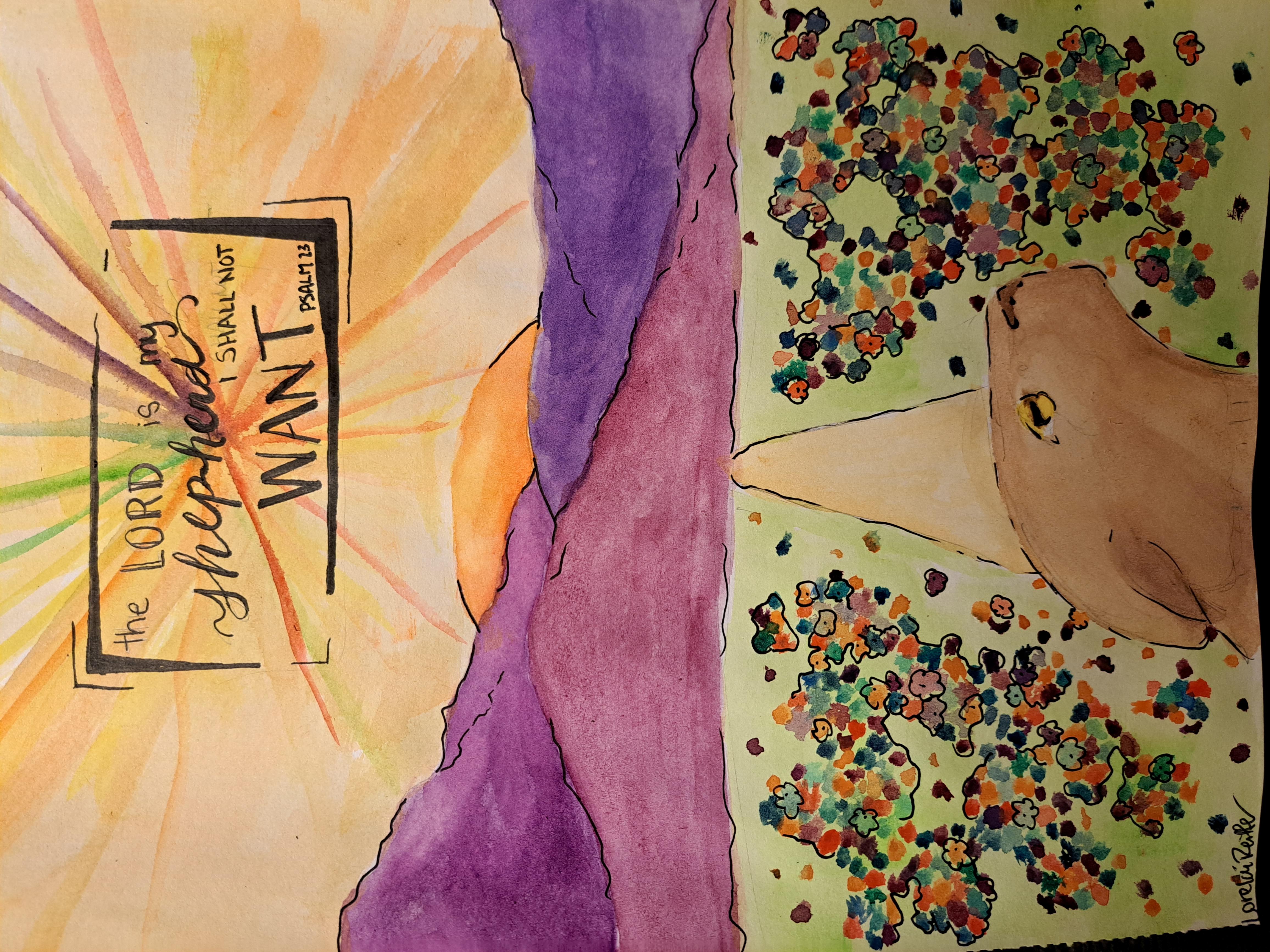
“The Lord is my shepherd;
I shall not want” (Psalm 23:1, NKJV).
Weekly Email
After Pentecost, the long season of the church known as Ordinary Time begins. The mountaintop experiences of the liturgical calendar are past, and the church enters into the everyday to experience God’s sanctifying work amid the ordinary. Ordinary Time corresponds at least in part with summertime, a season in which school finishes, travel happens, graduations are celebrated, and transitions are anticipated. If this is a time of change in your daily schedule, celebrating Ordinary Time can offer stability and grounding.
Ordinary Time is a good time to return to well-loved and well-known Scripture—passages so well ingrained in us that we don’t remember when we memorized them, as if we’ve always known them. Psalm 23 is one such passage, and its first verse is one of the best known verses in all of Scripture: “The Lord is my shepherd; I shall not want.”
What needs do you see met in your everyday life? Imagine your daily routine as a pasture you are being guided through. How does your shepherd care for you as you wake up? As you make coffee? Get the kids dressed? Get to work? Run errands? Make dinner? Get ready for bed? In the ordinary moments of your day, remember that God is your shepherd and that God takes care of you.
Sermon
Luke 15:1–10, “What’s So Great About a Shepherd?”
Sermon notes by Rev. Chelsey Harmon are available from the Center for Excellence in Preaching.
Children’s Message
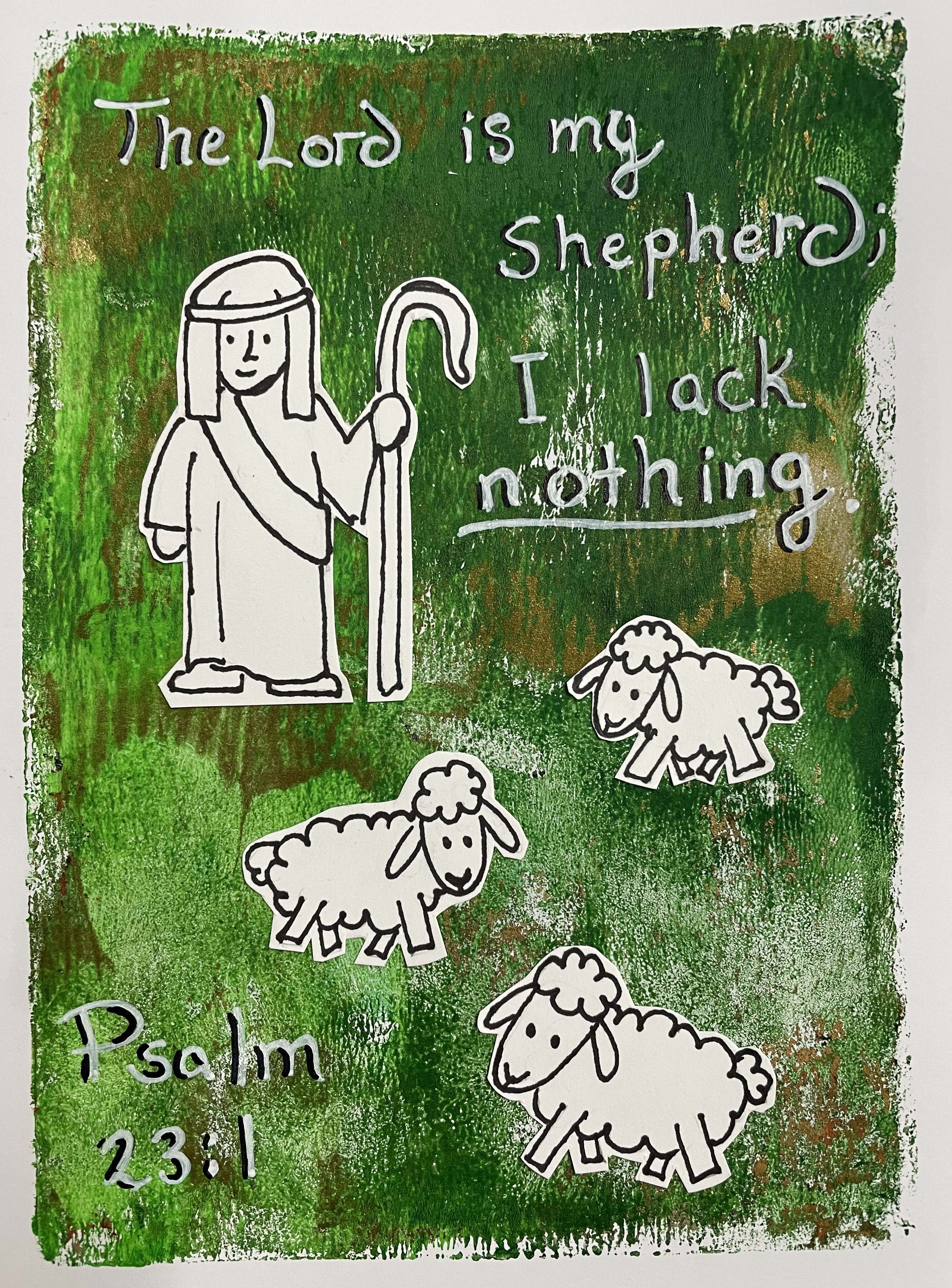
[Display or project a picture of a shepherd so that all the children can see it. If you choose, distribute small cards of the image and the blessing found below for the children to take home. You can also print more for congregants to pick up on their way out of the worship space.]
[Spend time wondering together using questions like these.]
Does any of you have a special name that only your family calls you? Or do you sometimes shorten your name a little and just use a part of it? Some people have lots of names. In the Bible, God has lots of names. Can you think of some of God’s names?
There is one name for God that we are going to be thinking about a lot this summer: shepherd. What does a shepherd do? I wonder why sometimes the Bible says that God is our shepherd? How is God like a shepherd? [Possible answers: he protects us; he watches over us; he helps us do the right thing.] Yes, and that’s why sometimes we call God our shepherd. This summer we are going to be thinking a lot about how God is our shepherd because we are going to be thinking about Psalm 23.
The first verse of Psalm 23 says, “The Lord is my shepherd; I shall not want.” Another version of this verse says “ God, my shepherd! I don’t need a thing” (Psalm 23:1, MSG). Of course we still need some things, like food and water, but the psalm writer is telling us that we can trust God always to be with us and care for us. Isn’t that incredible? God—the Creator of the whole universe!—loves and cares for each of us, and because God takes care of us we can trust God with everything.
When you pray to God you can call him God, Shepherd, or [one of the other names the children came up with]. Different names remind us of different things about God. When we pray to God and call him “Shepherd,” we are saying that God is someone we can trust. God is there for us, protects us, and is always with us even if we don’t see him. Let’s pray to our shepherd God now.
[The children’s message can end here, or you can continue with the text below if you want to make use of the optional handout.]
Optional Handout
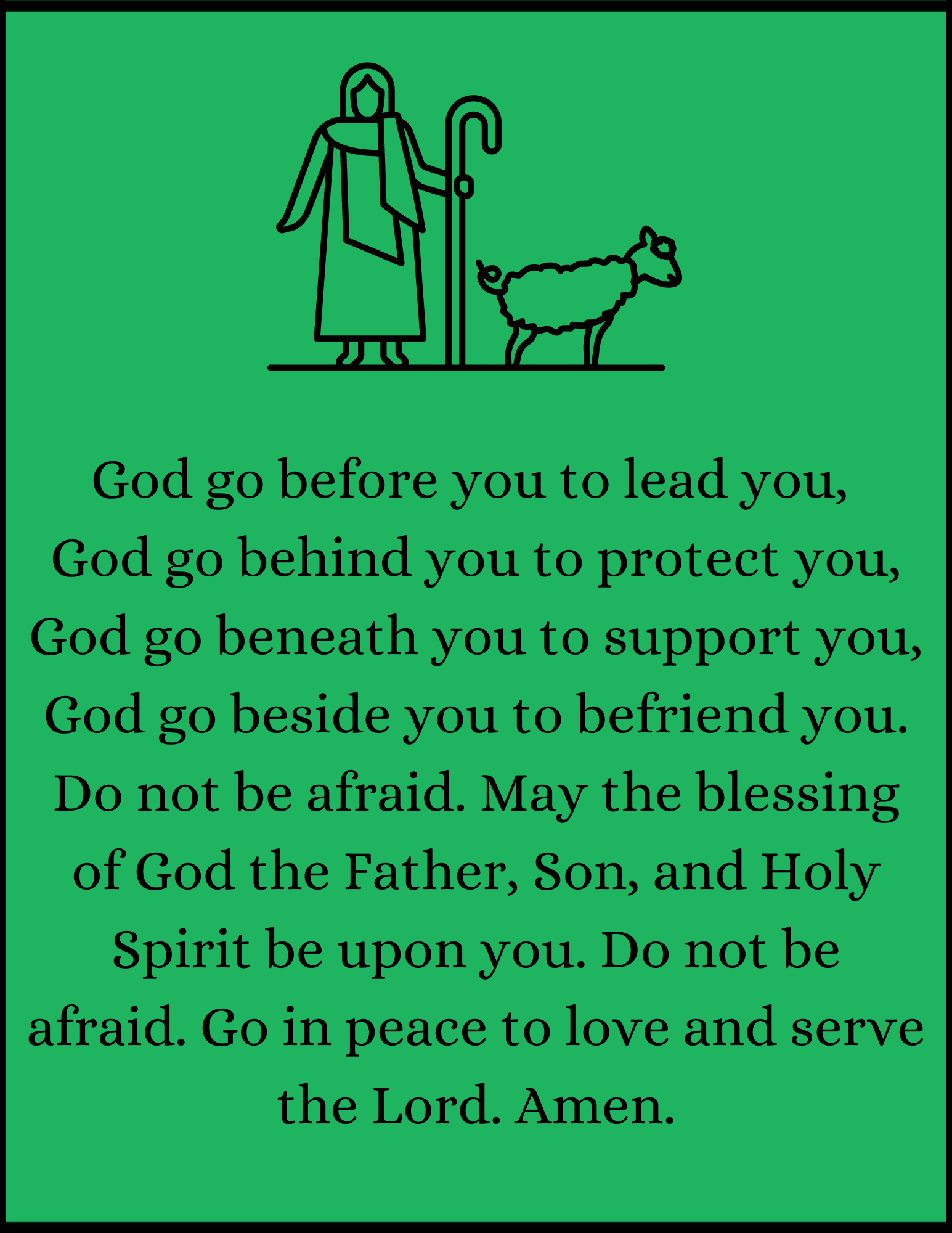
[Ahead of the service prepare a handout with a picture or line drawing of a Shepherd and the blessing found below. Make extra copies for older children and adults to pick up at the end of the service. A sample handout can be found in the resource section below.]
As I was thinking about this name for God, I was reminded of a blessing sometimes given at the end of the worship service. I put it on these cards with a picture of a shepherd, and I’m going to give one to each of you so that you can read it or have a grown up read it to you every day this week. Listen to what it says:
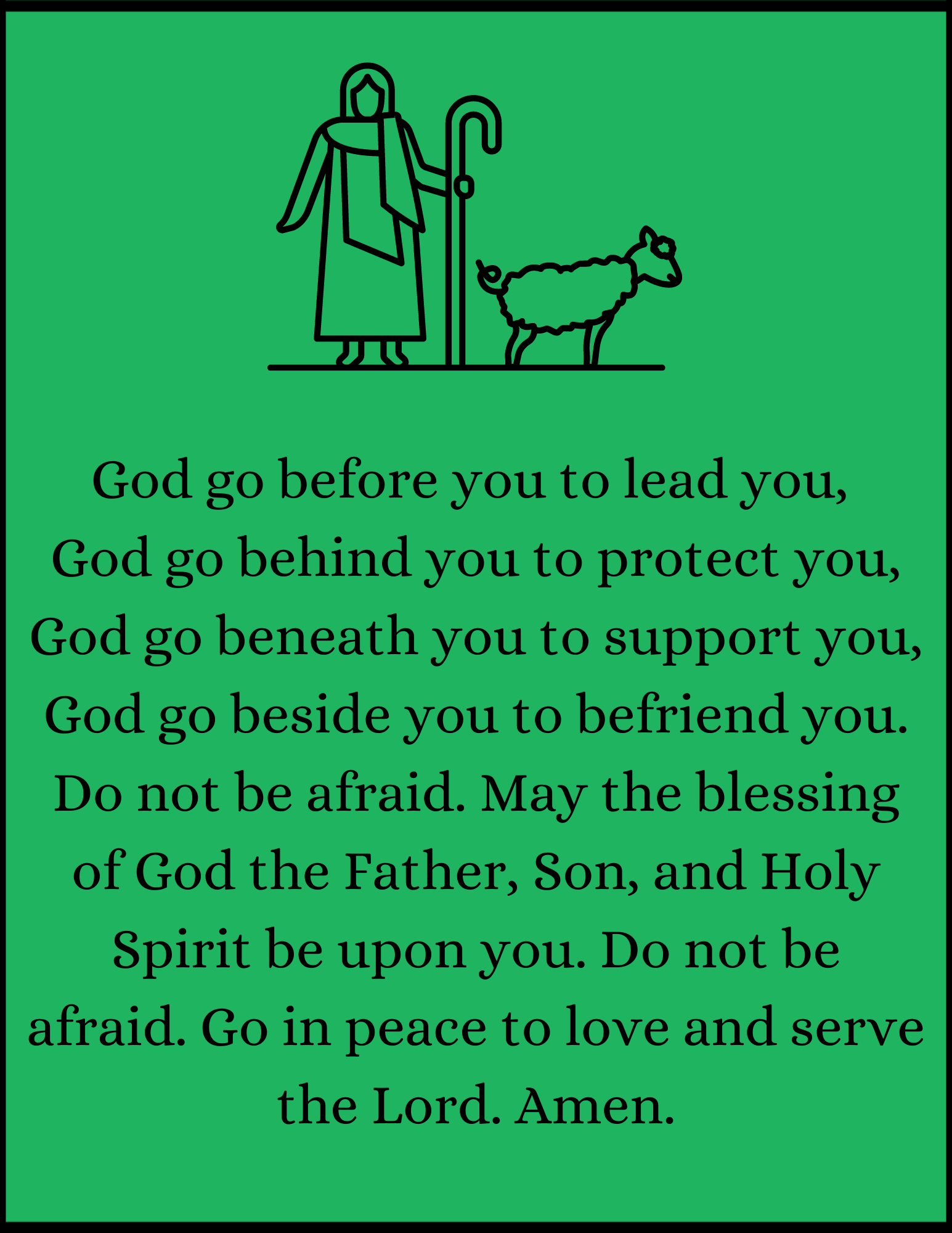
God goes before you to lead you,
God goes behind you to protect you,
God goes beneath you to support you,
God goes beside you to befriend you.
Do not be afraid.
May the blessing of God the Father, Son, and Holy Spirit be upon you.
Do not be afraid.
Go in peace to love and serve the Lord. Amen.
—Source unknown
I hope that you will take this home with you and remember that God is always with you.
You don’t have to be afraid about the future because God’s already there. You don’t have to be sad about what happened in the past because God is in the past as well. You don’t have to worry about the present because God is with you today too. I hope that helps you as much as it helps me.
Song Suggestions
“The King of Love My Shepherd Is” Baker
“He’s Got the Whole World in His Hands” Anonymous
Prompts for Reflection During the Week
Journaling: Make a list of all the ways a shepherd meets the needs of a sheep. Then extend the metaphor: what might God be doing in your life like a shepherd does in a sheep’s life? For example, a shepherd makes sure that a sheep receives food; in what ways does God make sure you are fed, both physically and spiritually? Faith Practice: Gratitude
Sensory: Using an old egg carton, start a sensory journey through the psalm. Each week, put something small into one of the egg holders that reminds you of that week’s verse. For example, perhaps this week you put a cotton ball in the first spot to give you a sensory memory for the idea of being a sheep in God’s flock. By the end of the twelve weeks you will have developed sensory memories associated with Psalm 23. This prompt will work well with young children who are just beginning to memorize Scripture, but it may also be a meaningful way for someone who has already memorized this psalm to experience it with more than just our eyes or our ears. Think of some creative ways to decorate your egg carton to reflect Psalm 23.
Weekly Devotions: Spend time this week with the many different passages of Scripture that consider the metaphor of God as a shepherd, especially Isaiah 40, Ezekiel 34, Luke 15, and John 10. How do these passages shed light on the Psalm 23 meditation on God as our shepherd? Which passages use the metaphor to show God’s gentle and caring side? Which passages use the metaphor of shepherd to show God’s protective and defending side? Faith Practice: Engaging Scripture
Revised Common Lectionary
Psalm 23
Years A, B, C: Easter—Fourth Sunday of Easter
Year A: Season after Pentecost—Proper 23 (28)
Year B: Season after Pentecost—Proper 11 (16)
Luke 15
Year C: Season after Pentecost—Proper 19 (24)