This is part of the worship series,
"Pictures of the Kingdom”
Series Introduction
Week 1 | Week 2 | Week 3 | Week 4
Week 5 | Week 6
Fifth Week
Parable of the Talents: Stewardship—Matthew 25:14–30
The Parable
A landowner plans to be away from his estate and entrusts three of his servants with varying amounts of money. On his return he calls each into his office and asks how they fared with the responsibility. The first two report good returns for their efforts of investment and in turn are welcomed to share in the master’s happiness and given more responsibility. The final servant did not invest and in turn is reprimanded for his laziness and permanently cast out of the master’s presence.
Picturing the Story
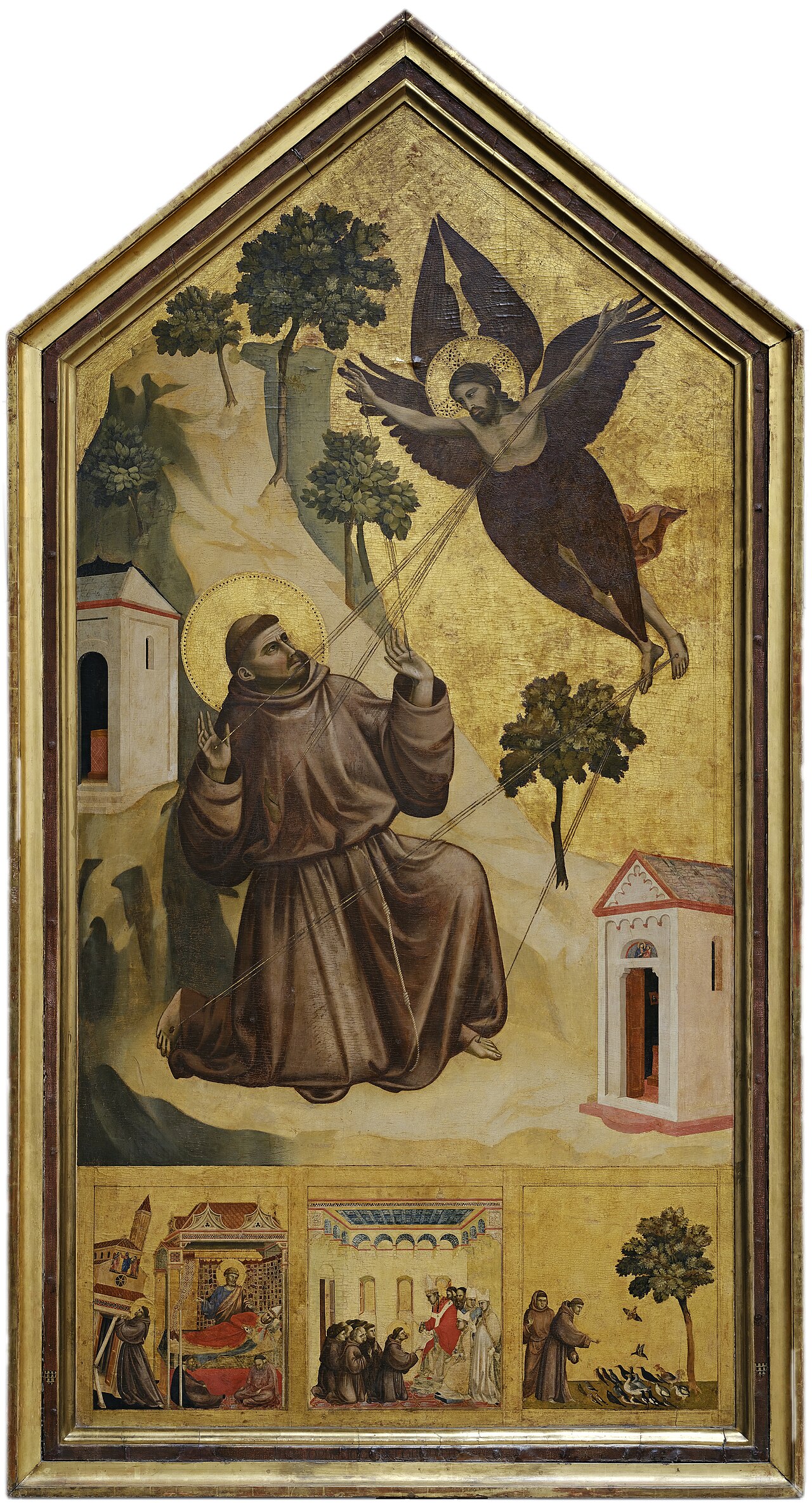
The late-medieval Italian artist Giotto di Bondone has illustrated the call to serve the master, Jesus, in a painted portrayal of St. Francis of Assisi, St. Francis Receiving the Stigmata (c. 1295–1300). In this case, the seriousness of the call to invest one’s life in Christ is evidenced by stigmata, the wound marks of Jesus on the body of the saint. As the apostle Paul remarked that he bore in his body the marks of Christ (Galatians 6:17), so Giotto interpreted the call of the believer to involve a radical call to suffer with and for our Lord. Giotto’s vision of discipleship was somewhat revolutionary and indeed was a factor in the nascent Italian Renaissance. In contrast to Byzantine icons depicting Jesus as the sovereign ruler of the universe (Pantocrator), striking reverential fear and some emotional distance in the believer, Giotto’s portrayal of Christ and his followers conveys a more intimate and personal connection. We invest in the kingdom because we love the Master with intimate affection, and we can’t wait for his return!
Applicatory Thoughts
The three eschatological parables recorded in Matthew 25 leave us with little doubt that when Jesus returns he will be asking us what we have been doing with ourselves while he has been away. His question includes stewardship of the material possessions we have been entrusted with. Jesus spoke of money on a regular basis. He spoke of matters of the heart, and apparently felt that mammon—material things—was close to most people’s hearts. But Giotto reminds us that this parable about the second coming ultimately keys in on our relationship with the Master. While the third servant felt distance from him and thus did not invest (compare with Matthew 25:24–25), so the first two knew the master closely and were eager to serve and please him. Is it evident not only in the way we manage our money, but in all aspects of our lives—our words, actions, decisions, relationships, lifestyles—that we have been marked by the personal presence of Jesus?
Suggested Songs
“Take My Life and Let It Be” Havergal
“God Whose Giving Knows No Ending” Edwards
“We Give Thee but Thine Own” How
“Establish The Work Of Our Hands” Keyes, McCracken, and Wardell
Revised Common Lectionary
Year A: Season after Pentecost—Proper 28 (33)